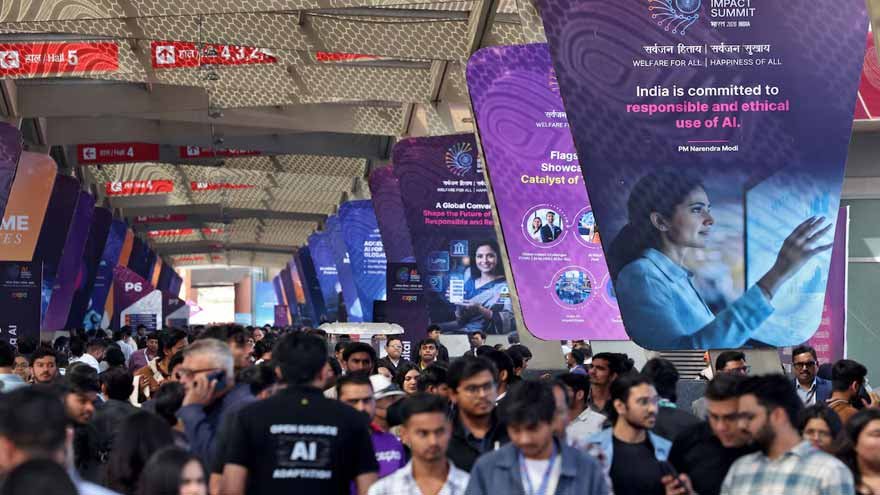
Billionaire philanthropist Bill Gates withdrew from India’s AI Impact Summit just hours before his scheduled keynote address on Thursday, dealing a setback to the high-profile event already facing criticism over organisational issues and logistical disruptions.
Pakistan Summons Afghan Diplomat Over Bajaur Terror Attack
Despite the absence, the six-day summit secured more than $200 billion in investment pledges for artificial intelligence infrastructure. Among the largest commitments was a $110 billion investment plan announced by Reliance Industries, while Tata Group signed a partnership agreement with OpenAI.
Gates’ cancellation followed an earlier withdrawal by Jensen Huang, adding to challenges faced by the summit, which India had promoted as the first major AI forum representing the Global South and a platform to strengthen its role in global AI governance.
The Bill & Melinda Gates Foundation said the decision was taken to ensure focus remained on the summit’s broader priorities. The move came weeks after the release of U.S. Department of Justice emails referencing past communication between foundation staff and late financier Jeffrey Epstein. Gates has maintained that his interactions were limited to philanthropic discussions and described meeting Epstein as a mistake.
In his keynote speech, Indian Prime Minister Narendra Modi stressed the importance of safeguarding children on AI platforms. He appeared alongside French President Emmanuel Macron, Google CEO Sundar Pichai, OpenAI chief Sam Altman and Anthropic CEO Dario Amodei during the launch of the New Delhi Frontier AI Commitments — voluntary principles aimed at promoting responsible development of advanced AI systems.
However, the summit faced criticism over organisational lapses. Exhibition halls were unexpectedly closed to the public, angering participating companies, while a controversy erupted after a robotic dog presented by Galgotias University was revealed to be a commercially available Chinese product.
Traffic disruptions and road closures for VIP movements also caused chaos across the capital, forcing many attendees to walk long distances after transport services became unavailable. Opposition leaders criticised the government’s management of the event, arguing that poor planning overshadowed its technological ambitions.