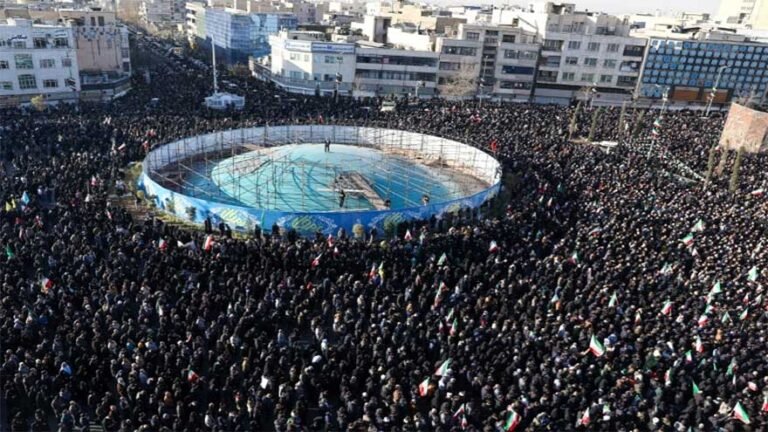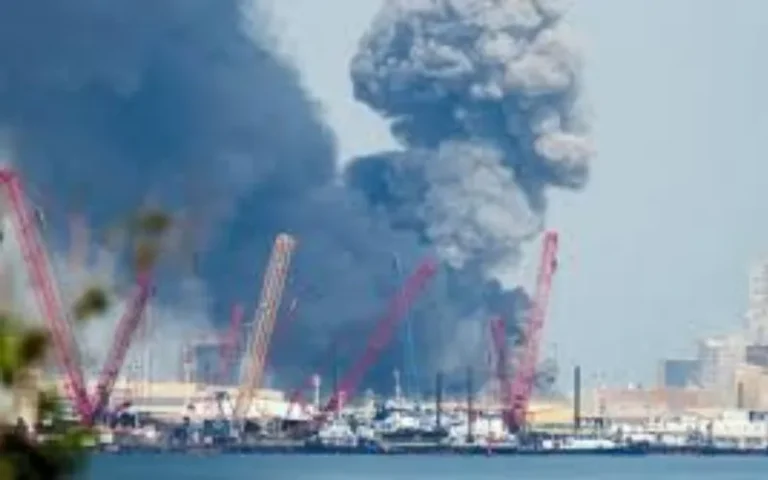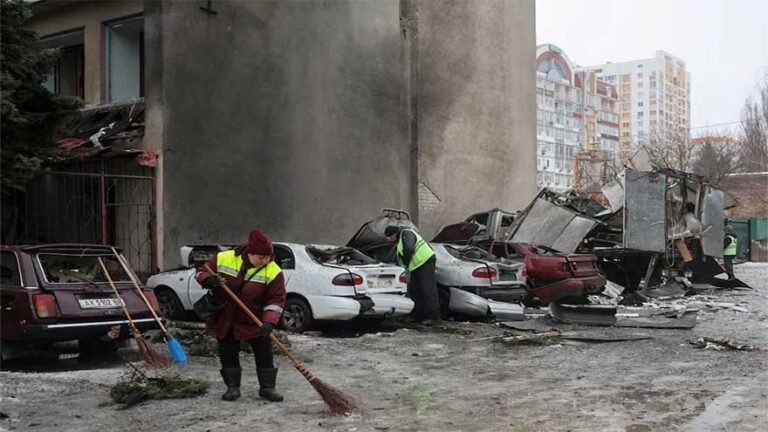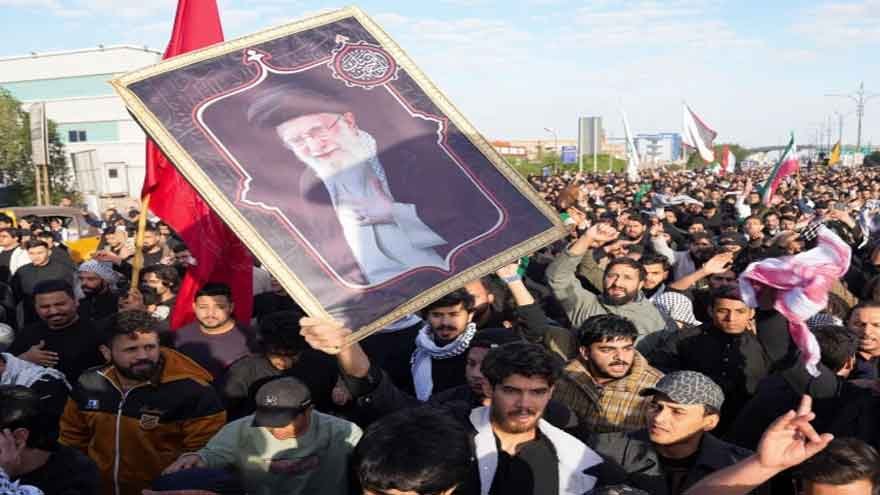
Israel carried out another wave of air strikes on Iran on Sunday, intensifying tensions across the Middle East a day after joint US-Israeli attacks killed Iran’s Supreme Leader Ali Khamenei, an event that has deepened fears of a wider regional conflict.
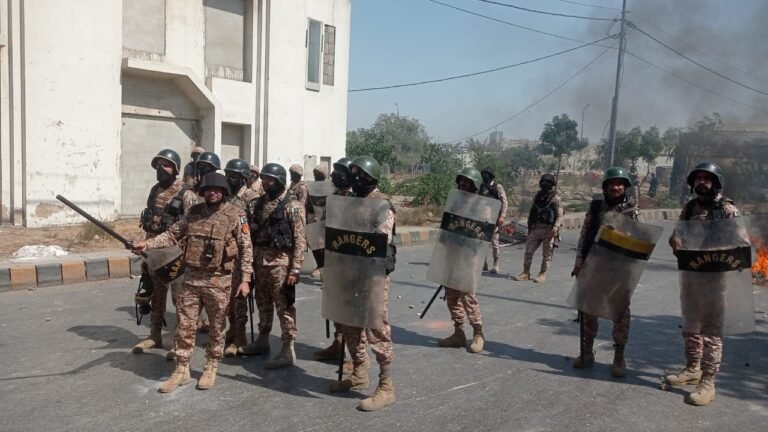
Nine Killed, 18 Injured in Violent Protests Near US Consulate in Karachi
Iranian state media confirmed the death of the 86-year-old leader following coordinated strikes described as the most extensive attacks on Iranian territory in decades. The operation has left the country facing political uncertainty while raising concerns about stability across the region.
US President Donald Trump said the strikes were aimed at eliminating what Washington described as a long-standing threat and preventing Iran from developing nuclear weapons. Israeli Prime Minister Benjamin Netanyahu said the campaign targeted Iran’s military infrastructure and sought to remove an “existential threat”.
Israel’s military said Sunday’s strikes focused on ballistic missile and air defence systems, while Iranian media reported fresh explosions in the capital Tehran.
Iran retaliates with missiles and drones
In response to the initial attacks, Iran launched hundreds of missiles and drones targeting US forces and Israeli cities, as well as locations in allied Arab states. The escalation led to widespread flight disruptions and heightened security alerts across the Gulf.
The Pentagon reported no American casualties but warned of heightened risks to US personnel and potential cyberattacks against critical infrastructure.
Damage was reported in the United Arab Emirates, including at Dubai’s international airport and near the Burj Al Arab area, while an incident at Zayed International Airport in Abu Dhabi resulted in one fatality and several injuries, according to local authorities.
Oil and global security concerns
Tehran warned that the strategic Strait of Hormuz — a vital route carrying roughly one-fifth of global oil supplies — had been closed, fuelling expectations of rising global energy prices.
Iran’s Islamic Revolutionary Guard Corps said further large-scale retaliation against US bases and Israeli targets was imminent, while Iran’s ambassador to the United Nations described the response as an act of self-defence.
UN Secretary-General António Guterres called for an immediate halt to hostilities, warning that diplomacy had been undermined at a critical moment.
Global reactions and uncertainty
The killing of Khamenei — along with several senior commanders — marks a major turning point in the long-running confrontation between Iran and its adversaries. Analysts say the loss of leadership could weaken Iran politically but is unlikely to immediately dismantle the country’s governing structure or the influence of the Revolutionary Guards.
Trump warned Iran against further retaliation, saying the United States would respond with unprecedented force if attacked again, as fears grow that the conflict could expand into a broader regional war.