Pakistan has signalled its willingness to host direct talks between the United States and Iran, as regional powers intensified diplomatic efforts to de-escalate tensions in the Gulf.
Sonam Kapoor, Anand Ahuja Welcome Second Baby Boy
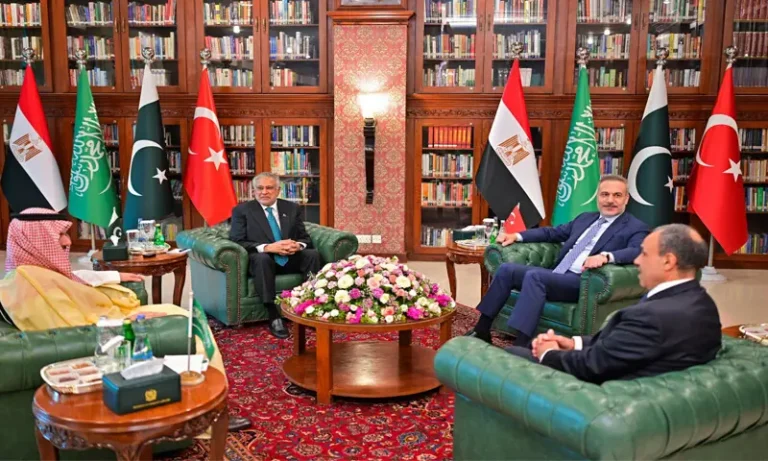
Deputy Prime Minister and Foreign Minister Ishaq Dar made the offer at the conclusion of a four-country ministerial meeting in Islamabad, stating that Pakistan would be “honoured” to facilitate meaningful negotiations aimed at achieving a lasting resolution to the ongoing conflict.
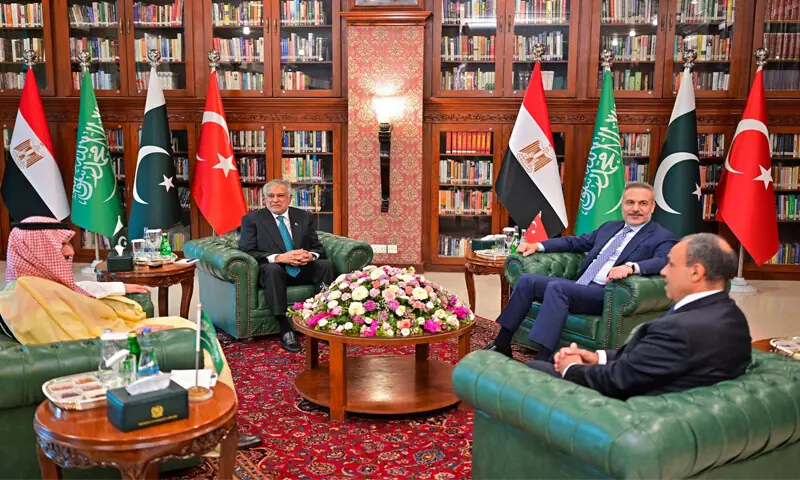
The meeting brought together foreign ministers from Pakistan, Saudi Arabia, Turkiye, and Egypt as part of a coordinated regional push to promote dialogue and diplomacy.
Participants, including Faisal bin Farhan, Hakan Fidan, and Badr Abdelatty, expressed concern over the humanitarian and economic impact of the conflict. They agreed that continued hostilities would only lead to further destruction and stressed the urgent need for a ceasefire.
The ministers reaffirmed their support for creating conditions conducive to structured negotiations between Washington and Tehran, while also emphasizing unity among Muslim countries.
Ishaq Dar noted that he had briefed counterparts on the possibility of hosting US-Iran talks in Islamabad, with participants reportedly expressing full support for the initiative. However, diplomatic sources indicated that direct negotiations have yet to be confirmed and remain dependent on developments on the ground.
Pakistan’s efforts have received backing from China, with Foreign Minister Wang Yi engaging in discussions with Islamabad. Dar is scheduled to visit Beijing to further coordinate efforts and explore joint support for dialogue.
A key focus of the discussions was ensuring secure navigation through the strategically vital Strait of Hormuz, a major global energy corridor. Officials described maritime safety as a potential confidence-building measure toward broader negotiations.
On the sidelines of the meeting, Ishaq Dar also held separate bilateral talks with his counterparts to align diplomatic positions. The visiting ministers later met Prime Minister Shehbaz Sharif, who reiterated Pakistan’s commitment to facilitating peace and stressed the importance of collective action.
While no definitive timeline has been set for direct talks, officials say growing regional and international support has created a meaningful opportunity for dialogue. Ishaq Dar emphasized that both Washington and Tehran have shown confidence in Pakistan’s role, underscoring that diplomacy remains the only viable path to peace.