Washington: The Supreme Court of the United States on Friday struck down President Donald Trump’s sweeping tariffs imposed under a national emergency law, ruling that the administration exceeded its authority in a decision with far-reaching implications for the global economy.
In a 6-3 ruling authored by Chief Justice John Roberts, the court upheld a lower court’s decision that Trump’s use of the International Emergency Economic Powers Act (IEEPA) to impose broad tariffs was unlawful.
The justices determined that the administration’s interpretation of IEEPA intruded upon Congress’s constitutional authority to levy taxes and tariffs. The ruling cited the “major questions” doctrine, which requires clear congressional authorization for executive actions of vast economic and political significance.
Roberts wrote that the president must “point to clear congressional authorisation” to justify such an extraordinary assertion of power, concluding that Trump had failed to do so.
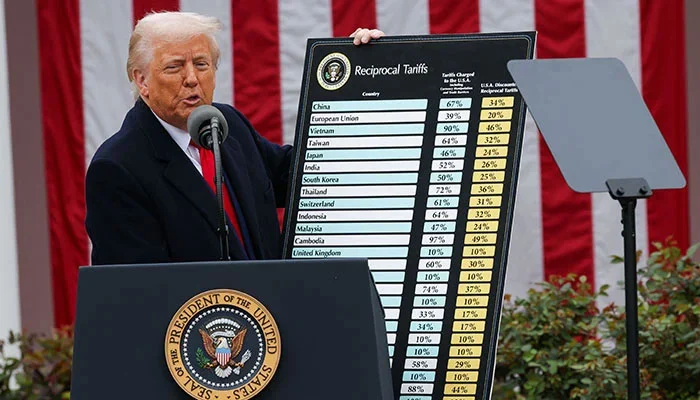
The decision marks a significant setback for Trump’s trade policy, which relied heavily on tariffs as both an economic and diplomatic tool. Since returning to office in January 2025, Trump has used tariffs to pressure trading partners, initiate trade disputes, and pursue foreign policy objectives.
The legal challenge was brought by several businesses affected by the tariffs, along with 12 US states, most governed by Democrats. The court’s conservative majority split in the ruling, with Justices Clarence Thomas, Samuel Alito, and Brett Kavanaugh dissenting.
Trump’s tariffs under IEEPA were projected to generate trillions of dollars over the next decade. Economists from the Penn-Wharton Budget Model estimated that more than $175 billion had already been collected under the IEEPA-based tariffs — funds that may now need to be refunded following the ruling.
The US Constitution grants Congress the authority to impose taxes and tariffs, though IEEPA allows a president to regulate commerce during a declared national emergency. Historically, the law has been used to impose sanctions and freeze assets, not to enact sweeping trade tariffs.
While the administration may attempt to rely on alternative statutory provisions — including laws related to national security threats and unfair trade practices — analysts note that none provide the same breadth and flexibility as IEEPA.
The ruling significantly curtails presidential authority in trade matters and reinforces congressional control over taxation policy, potentially reshaping the trajectory of US trade strategy.