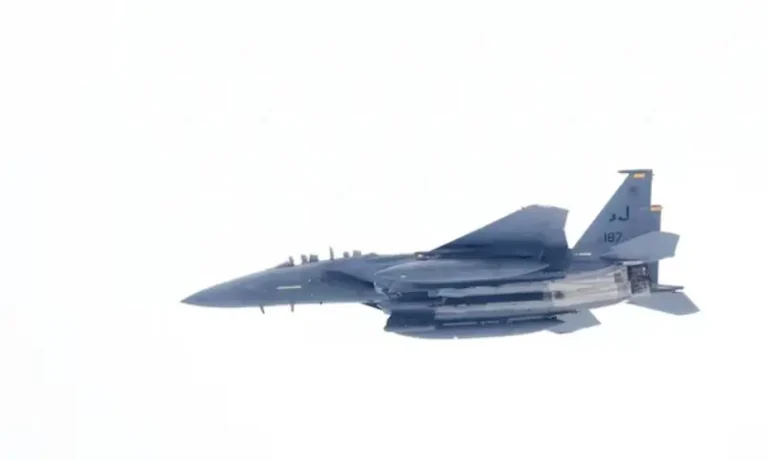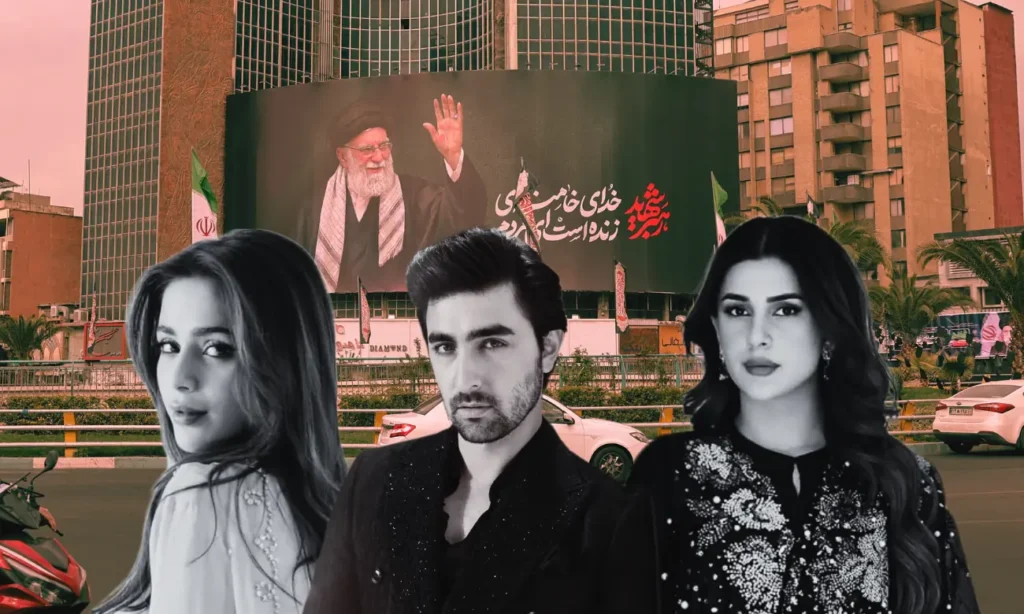
Reactions poured in across Pakistan on Sunday after tensions in the Middle East escalated sharply following Iran’s confirmation that Supreme Leader Ayatollah Ali Khamenei was killed in a joint US-Israeli airstrike, triggering widespread grief, anger and concern among political observers, celebrities and the public.
Middle East Conflict Escalates After Khamenei’s Death as US-Iran War Sends Shockwaves Across Region
Iran declared 40 days of national mourning after the assassination, an event that has pushed the region into one of its most dangerous crises in decades. Across Pakistan, responses ranged from emotional tributes to street protests condemning the attack.
Several Pakistani celebrities expressed sorrow on social media. Actor Kubra Khan described the loss as “real” in an Instagram post, while singer Natasha Baig offered prayers for the late Iranian leader.
Singer Aima Baig voiced concern over what she termed violations of international law in the region and reiterated support for the Iranian people’s right to self-determination.
Television host Shaista Lodhi and actor Khaqan Shahnawaz also criticised the attack, stating that history would judge the aggressors harshly. Lodhi added that justice would ultimately prevail against oppression.
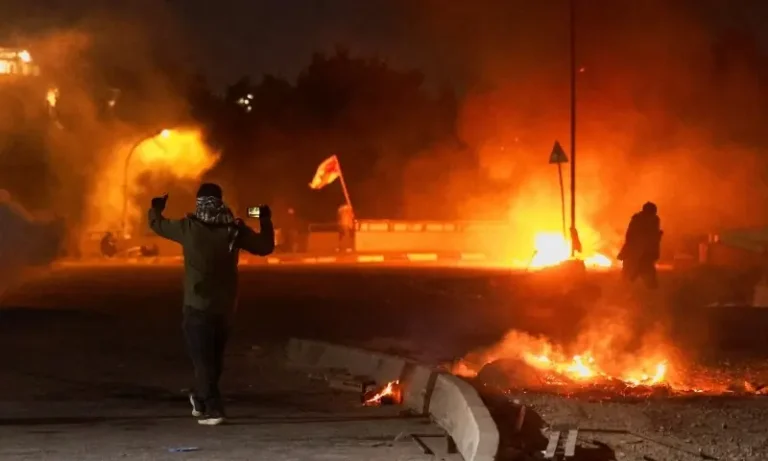
Public reaction extended beyond social media, with protests organised in several cities across Pakistan against the United States and Israel. Demonstrations reflected growing anxiety over the widening conflict and its potential regional consequences.
In a gesture of solidarity, members of Hindu communities in the Sindh towns of Umerkot and Khanpur Mahar announced they would scale down Holi celebrations this week to acknowledge the mourning period following Khamenei’s death.
Analysts warn that the escalating confrontation between Iran and the US-Israel alliance could further destabilise the region, raising fears of broader conflict and economic repercussions for neighbouring countries, including Pakistan.