Organisers of the Eurovision Song Contest have introduced significant changes to voting rules in an effort to prevent state interference, following widespread controversy surrounding Israel’s participation this year.
Ali Zafar Recreates ‘Zalim Nazron Se’ With Pop Icon Ali Haider in Nostalgic-Modern Fusion
The European Broadcasting Union (EBU) announced new guidelines aimed at discouraging governments and outside groups from “disproportionately promoting” entries in a way that could influence the competition’s outcome. Under the revised policy, violations could result in sanctions.
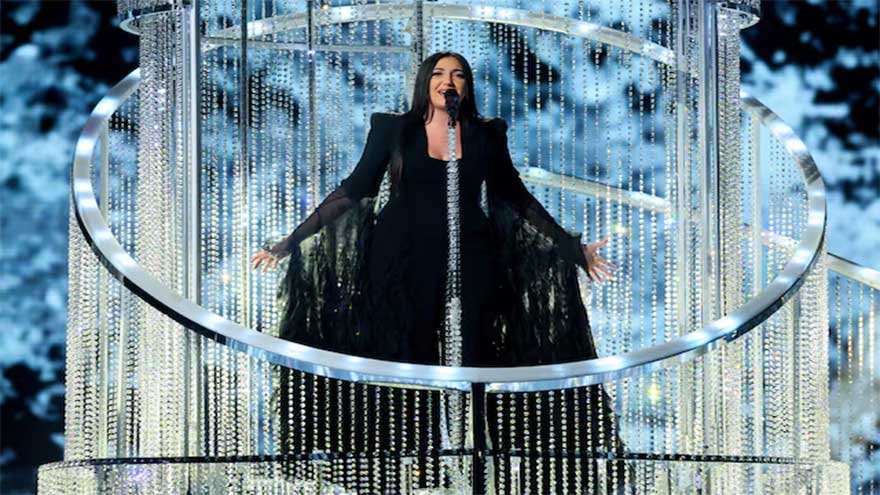
This year’s contest saw Israel’s Yuval Raphael — a survivor of the October 7, 2023 Hamas attack — place second overall. However, concerns emerged on social media and from several national broadcasters regarding the transparency of the voting system. Even the winner, Austria’s JJ, echoed these concerns. Critics argued that state-backed promotion unfairly boosted Israel’s ranking and that individuals casting multiple votes for the same entry undermined the competition’s spirit.
Israel has not formally addressed the accusations but frequently claims it is targeted by international smear campaigns amid the Gaza conflict. The Israeli mission in Geneva did not respond to a Reuters request for comment.
Eurovision director Martin Green said the rules are being tightened to preserve the contest’s neutrality. “The Contest should remain a neutral space and must not be instrumentalized,” he stated.
Under the new framework, an expanded professional jury will be reinstated for the semi-finals, where it will hold 50% of the vote — matching the public vote. Audience members will also see their voting cap reduced from 20 votes to 10. The EBU said fans will be encouraged to distribute their support across multiple performers.
Debate Over Israel’s Future Participation
Ahead of the 70th Eurovision edition next May in Austria, EBU members will meet in December to discuss Israel’s involvement. Five countries — the Netherlands, Slovenia, Iceland, Ireland and Spain — have called for Israel’s exclusion in light of civilian casualties in Gaza. Israel denies targeting civilians and maintains it is being unfairly demonised.
Separately, Euronews reported that a group of European lawmakers requested the release of this year’s voting data over fears of manipulation, echoing similar concerns raised by several broadcasters. Ireland’s public broadcaster RTÉ confirmed it had sought a detailed breakdown of the voting numbers.
Posts from Israel’s official X account, run by its foreign ministry, encouraged users to vote for Raphael during the semi-final, noting, “you can vote up to 20 times,” further fuelling debate over state-backed campaigning.