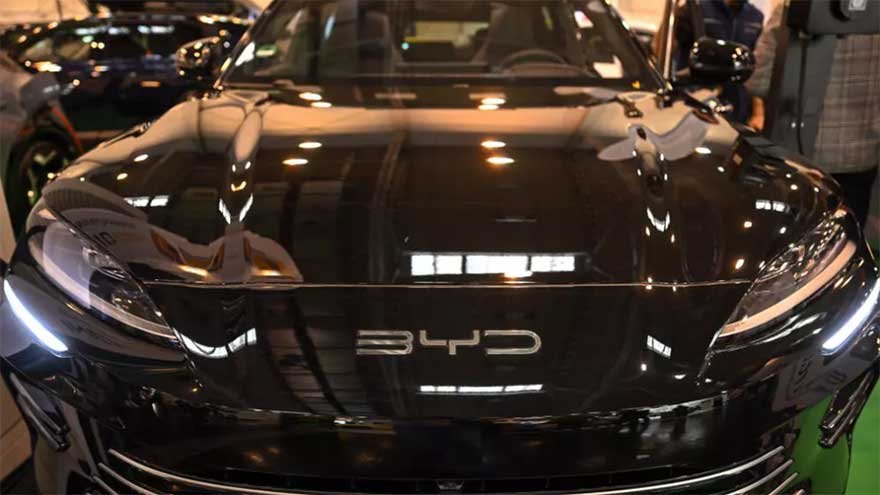
Chinese automaker BYD is poised to officially surpass Tesla as the world’s largest electric vehicle (EV) company by annual sales, marking a major shift in the global EV market.
YouTuber Rajab Butt Assaulted by Lawyers During Court Appearance in Karachi
Both companies are expected to release their final 2025 sales figures soon, but data so far indicates that Tesla is unlikely to retain its leadership position. By the end of November, Shenzhen-based BYD had sold 2.07 million electric vehicles this year, including battery-powered and hybrid models.
In comparison, Tesla had sold 1.22 million EVs by the end of September. Although Tesla recorded a one-time surge to nearly 500,000 vehicle sales in the third quarter, analysts say this spike was driven by buyers rushing to take advantage of a US tax credit before it expired in late September under legislation supported by President Donald Trump.
According to FactSet consensus estimates, Tesla’s fourth-quarter sales are expected to drop to around 449,000 units, bringing its total 2025 sales to approximately 1.65 million — a decline of 7.7% year-on-year and well below BYD’s current tally. Deutsche Bank projects an even weaker fourth quarter for Tesla, forecasting sales of about 405,000 vehicles and sharp declines in North America and Europe.
Industry analysts note that the US EV market is undergoing a transition following the removal of the $7,500 federal tax credit, which has disrupted demand. Tesla’s sales have also faced pressure amid rising competition from Chinese and European automakers, as well as controversy surrounding CEO Elon Musk’s political positions.
“We believe Tesla will see some weakness on deliveries in the fourth quarter,” said Dan Ives of Wedbush Securities, adding that investors are now closely focused on Tesla’s autonomous vehicle strategy expected to accelerate in 2026.
While BYD has grown rapidly, it faces challenges in China due to price-sensitive consumers and tighter profit margins. To offset this, the company has expanded aggressively into international markets and invested in overseas production facilities. Analysts say this geographic diversification could help BYD navigate rising global tariffs on Chinese-made EVs.
Despite losing market leadership, Tesla may still find future growth through advancements in autonomous driving technology. Analysts believe that improvements in Tesla’s Full Self-Driving system and the planned launch of its Cybercab robotaxi in 2026, along with lower-priced vehicle models, could revive demand.