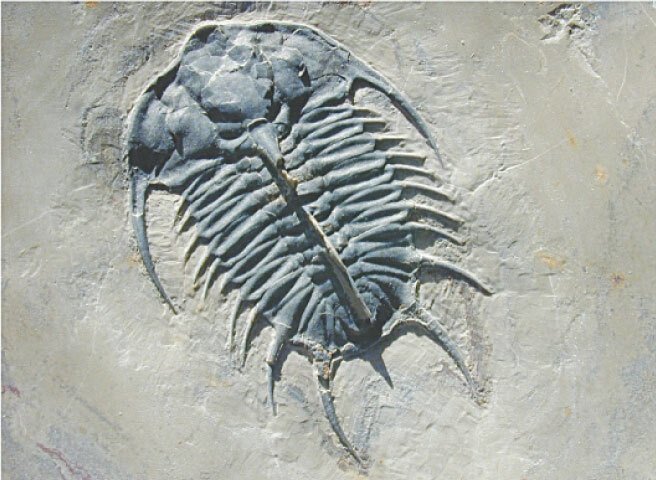
ISLAMABAD: A multidisciplinary team of researchers has uncovered powerful new chemical evidence of Earth’s earliest life, revealing that oxygen-producing photosynthesis was taking place more than 800 million years earlier than previously believed.
The breakthrough study — published in the Proceedings of the National Academy of Sciences — was led by scientists from the Carnegie Institution for Science in collaboration with several global research institutions. Using a combination of advanced chemical techniques and artificial intelligence, the team analysed more than 400 samples, including ancient sediments, fossils, modern organisms, and even meteorites, in search of molecular traces of life.
By breaking down organic and inorganic materials at a fine chemical level, researchers trained AI to recognise subtle “fingerprints” left behind by biological processes. These signatures, they found, can survive even after billions of years of geological change. According to Carnegie Science, the AI system was able to distinguish biological material from non-living sources with over 90% accuracy.
Crucially, the method uncovered chemical patterns associated with life in rocks dating back 3.3 billion years — almost twice as old as the previous limit of around 1.7 billion years. This extends the window of time in which preserved organic molecules can provide insights into early organisms and their evolution.
The study also uncovered molecular evidence that oxygen-producing photosynthesis — the process used by plants, algae, and many microbes to convert sunlight into energy — was already functional at least 2.5 billion years ago. This pushes the known timeline of photosynthesis back by more than 800 million years.
Dr Robert Hazen, senior staff scientist at the Carnegie Institution for Science, likened the AI’s ability to interpret ancient chemistry to solving a massive puzzle. “Imagine showing thousands of jigsaw pieces to a computer and asking whether the original picture was a flower or a meteorite,” he said. “Our results show that ancient life leaves behind more than fossils; it leaves chemical echoes. Using machine learning, we can now reliably interpret these echoes for the first time.”
Researchers noted that the age of samples plays a major role in detection, with younger rocks from the past 500 million years retaining the strongest signs of biological origin.
Beyond reshaping the timeline of life on Earth, the findings hold major implications for astrobiology. The same AI-driven techniques could be applied to Martian rocks or samples from icy worlds like Europa, potentially offering a new way to identify traces of extraterrestrial life — even if its original molecules have long since degraded.