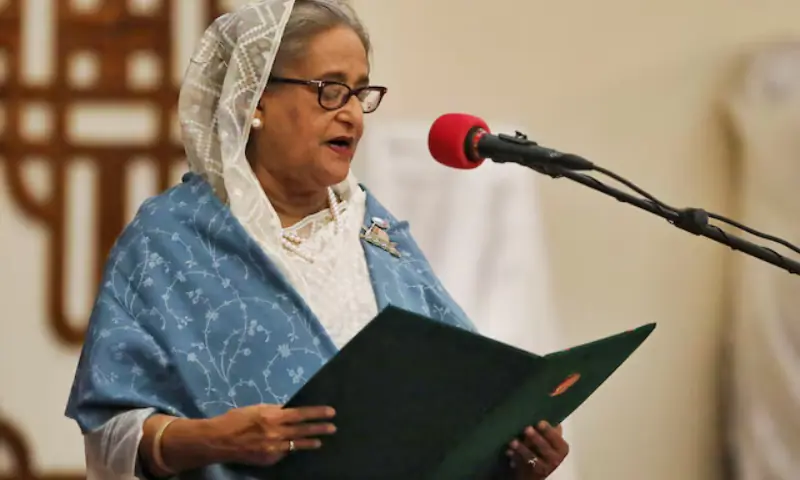
A Bangladesh court on Monday sentenced ousted Prime Minister Sheikh Hasina to death after finding her guilty of ordering a deadly crackdown on a student-led uprising last year, marking a dramatic escalation in the country’s deepening political crisis.
The verdict, delivered by the International Crimes Tribunal in Dhaka under heavy security, comes just weeks ahead of parliamentary elections expected in early February. Hasina, who fled to India in August 2024, was tried in absentia.
Her Awami League party has been barred from participating in the upcoming polls, raising fears that the ruling could trigger renewed political unrest.
Prosecutors told the court that they had uncovered evidence directly linking Hasina to authorising lethal force against protesters during the July–August 2024 uprising. A UN report estimated that up to 1,400 people were killed and thousands more wounded — most by security forces’ gunfire — in what became Bangladesh’s bloodiest political violence since the 1971 Liberation War.
Hasina was assigned a state-appointed defence lawyer, who rejected the charges as baseless and urged the court to acquit her. The former prime minister, however, had already dismissed the trial as politically motivated, calling the outcome “a foregone conclusion.”
Her son and adviser, Sajeeb Wazed, said in comments to Reuters before the ruling that the family would not appeal unless a democratically elected government — with Awami League participation — took office.
Tensions have surged across Bangladesh in recent days, with at least 30 crude bomb blasts and more than two dozen vehicles set ablaze nationwide ahead of the verdict. Despite the unrest, no casualties have been reported so far.
The verdict can be appealed in the Supreme Court, but its political implications are expected to reverberate across Bangladesh in the weeks leading up to the national vote.