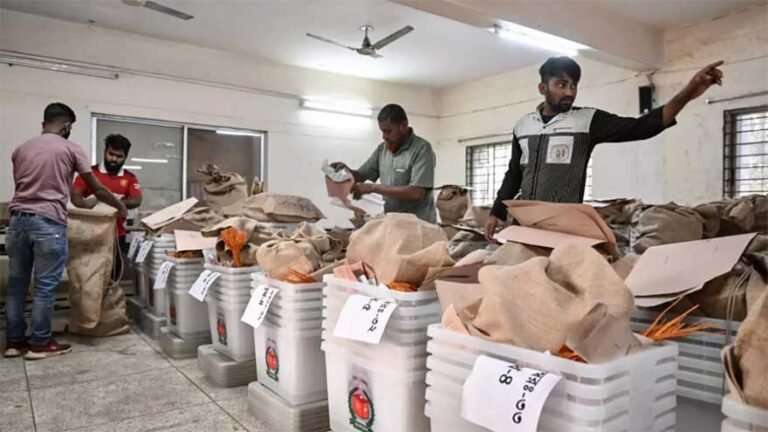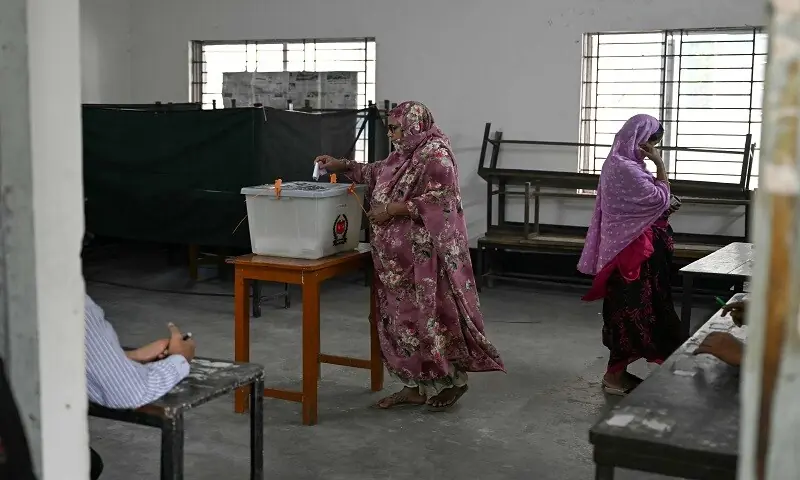
DHAKA: Bangladeshis lined up outside polling stations on Thursday as voting began in a pivotal general election seen as a return to democratic rule following the 2024 ouster of long-time prime minister Sheikh Hasina in a Gen Z-led uprising.
‘Dawson’s Creek’ Star James Van Der Beek Dies at 48 After Cancer Battle
Analysts say a decisive outcome is essential for stability in the South Asian nation of 175 million, after months of unrest triggered by deadly anti-Hasina protests that disrupted key sectors, including the country’s garments industry — the world’s second-largest exporter.
The contest marks what observers describe as the world’s first election following a youth-driven revolution led by under-30s. Nepal is expected to hold a similar vote next month.
The race pits two rival coalitions led by former allies — the Bangladesh Nationalist Party (BNP) and Jamaat-e-Islami — with opinion polls suggesting an edge for the BNP.
In the capital Dhaka, voters queued outside polling booths before they opened at 7:30am local time. Mohammed Jobair Hossain, 39, who last voted in 2008, expressed optimism.
“I am feeling excited because we are voting in a free manner after 17 years,” he said. “Our votes will matter and have meaning.”
Hasina’s Awami League has been banned, and the former premier remains in self-imposed exile in India. Her departure has also reshaped regional dynamics, with analysts noting that China may seek to expand its influence as Dhaka’s ties with New Delhi cool.
Unlike previous elections marked by opposition boycotts and allegations of intimidation, more than 2,000 candidates — including independents — are contesting 300 seats in the Jatiya Sangsad, or House of the Nation. Voting in one constituency has been postponed following the death of a candidate. In total, at least 50 parties are participating — a national record.
Nobel laureate Muhammad Yunus, head of the interim government installed after Hasina’s removal, described the vote as historic.
“This election is not just another routine vote,” he said earlier this week. “The public awakening we witnessed against long-standing anger, inequality, deprivation and injustice finds its constitutional expression in this election.”
Alongside the general election, voters are also participating in a referendum on constitutional reforms. Proposed changes include the establishment of a neutral caretaker government during election periods, the creation of a bicameral parliament, increased representation for women, strengthened judicial independence and a two-term limit for the prime minister.
Despite a crowded field and expectations of a close contest, the campaign period remained largely peaceful. On polling day, more than 100,000 armed forces personnel are assisting nearly 200,000 police officers to maintain order.
Polling began at 7:30am and will close at 4:30pm, with vote counting to begin shortly afterward. Early trends are expected around midnight, and official results are likely by Friday morning, according to Election Commission officials.
Nearly 128 million voters are registered, 49 per cent of them women, although only 83 female candidates are contesting seats.
Corruption and inflation have emerged as key concerns among voters. The main prime ministerial contenders are BNP’s Tarique Rahman and Jamaat chief Shafiqur Rahman.
While some voters said economic hardship prevented them from traveling to cast ballots, others voiced frustration over the exclusion of Hasina’s party. Yet many remained determined to participate.
“During Hasina’s time, we couldn’t cast our votes,” said Shakil Ahmed, a driver in Dhaka. “It’s my right to vote. This time, I won’t miss it.”
Meanwhile, Pakistan’s President Asif Ali Zardari extended his best wishes to the people of Bangladesh, expressing hope for a peaceful process that strengthens democracy and stability.