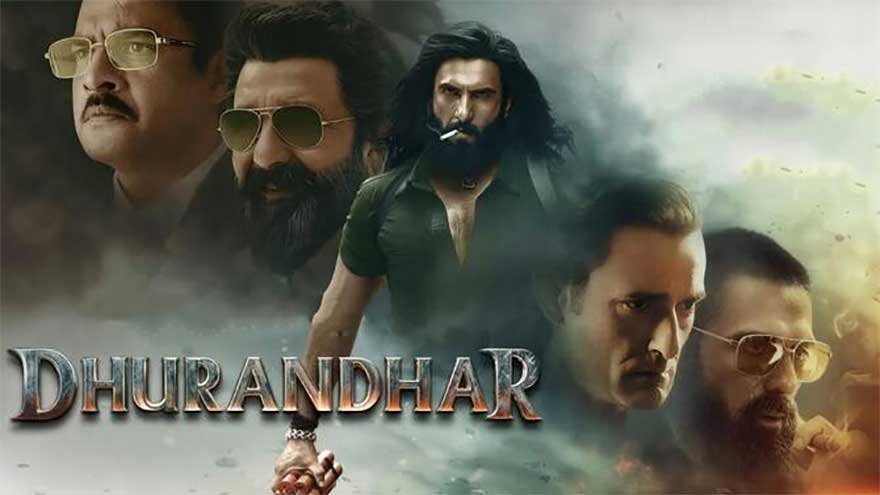
A Bollywood spy thriller set largely in Pakistan has ignited controversy on both sides of the border, reigniting long-standing tensions over how cross-border issues are portrayed in Indian cinema.
Iran’s Khamenei Tells Trump to Focus on US as Protests Escalate, Internet Blacked Out
“Dhurandhar,” starring Ranveer Singh as an Indian intelligence officer operating undercover in Karachi, has drawn strong criticism from Pakistani officials and residents, as well as mixed reactions from international observers. The 3.5-hour film is directed by Aditya Dhar and blends real historical events with a fictional narrative centered on an Indian spy’s mission to dismantle alleged links between Karachi-based criminal gangs and militant networks.
The film references major incidents such as the 1999 plane hijacking, the 2001 Indian Parliament attack, and the 2008 Mumbai attacks, weaving them into a storyline that critics say blurs the line between fact and fiction.
“Dhurandhar” is part of a broader trend in Indian cinema that has seen the rise of nationalist-themed blockbusters, many of which resonate with the political climate under Prime Minister Narendra Modi. Earlier films such as The Kashmir Files and The Kerala Story achieved commercial success but also sparked debates over historical accuracy and ideological bias.
In India, the film has also stirred controversy within the industry. Several critics who published negative reviews reported online harassment, prompting the Film Critics Guild to condemn what it described as “targeted attacks” against reviewers.
Bollywood analyst Komal Nahta noted that patriotic themes often attract audiences but cautioned against oversimplifying success. “Films that evoke patriotic fervour generally do well, but that does not mean every film with such a subject is guaranteed success,” he said.
In Pakistan, reaction has been particularly sharp, especially in Karachi’s Lyari neighbourhood, which is prominently featured in the film. Residents accused the filmmakers of misrepresenting the area and its people.
“It is a completely baseless movie,” said Mohammad Zohaib, a Lyari resident and burger shop owner. “They don’t know anything about Lyari, so how can they make a realistic film about it?”
The Pakistan Peoples Party (PPP) has also taken legal action in a Karachi court, objecting to what it says is the unauthorised use of images of assassinated former prime minister Benazir Bhutto and the portrayal of party leaders as terrorist sympathisers.
Another Lyari resident, salon owner Khizer Abdul Wahid, said the film distorted reality. “About 10 percent of what has been shown is real. Ninety percent is not,” he said.
The controversy underscores how cinema continues to mirror the decades-old rivalry between India and Pakistan, two nuclear-armed neighbours that have fought four wars since their partition in 1947.