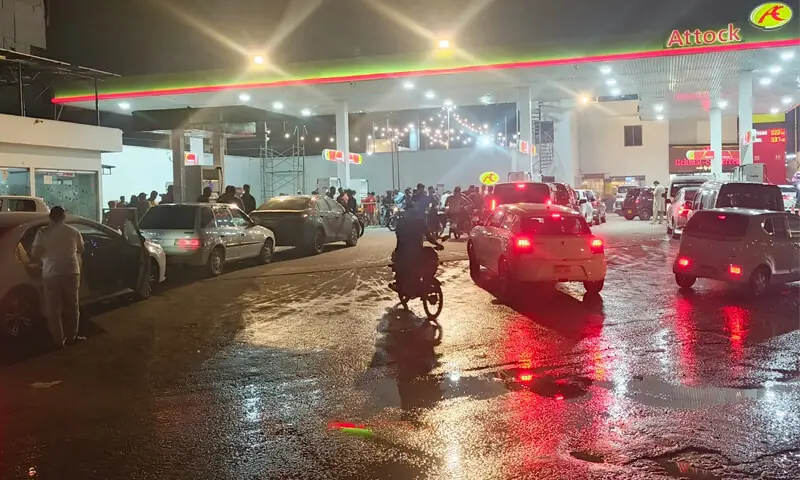
Fuel consumption in Pakistan recorded a notable increase in March despite a sharp rise in petroleum prices and ongoing tensions in the Middle East.
Sindh, Punjab Announce Relief Measures After Sharp Fuel Price Hike
According to industry data, diesel and petrol sales rose by 13 per cent and 8 per cent month-on-month, reaching 590,000 tonnes and 670,000 tonnes, respectively. On a yearly basis, sales surged by 21 per cent for diesel and 16 per cent for petrol.
The increase came ahead of a major price hike announced on March 6, when diesel and petrol prices rose significantly. Anticipating further increases and possible shortages, consumers rushed to fuel stations to fill their tanks, boosting sales and inventory gains for oil marketing companies.
Overall oil sales, including furnace oil, climbed to 1.44 million tonnes in March — up 19 per cent year-on-year and 13 per cent month-on-month.
Analysts link the rising demand to increased vehicle sales and improving economic activity. Sales of cars, SUVs, pickups, and vans grew by 43 per cent year-on-year during the first eight months of FY26, while two- and three-wheeler sales rose by 31 per cent, further driving petrol consumption.
Furnace oil (FO) sales also showed a sharp rebound in March, rising 98 per cent month-on-month and 62 per cent year-on-year to 88,000 tonnes, possibly due to its use as an alternative amid higher fuel costs and supply concerns.
However, experts caution that the upward trend may not continue. Rising fuel prices are expected to dampen demand in April, with further price increases likely as the government manages revenue targets through the Petroleum Development Levy.
Despite the cost pressures, analysts note that the growth in oil sales reflects stronger economic momentum, lower inflation, and improved control over fuel smuggling.