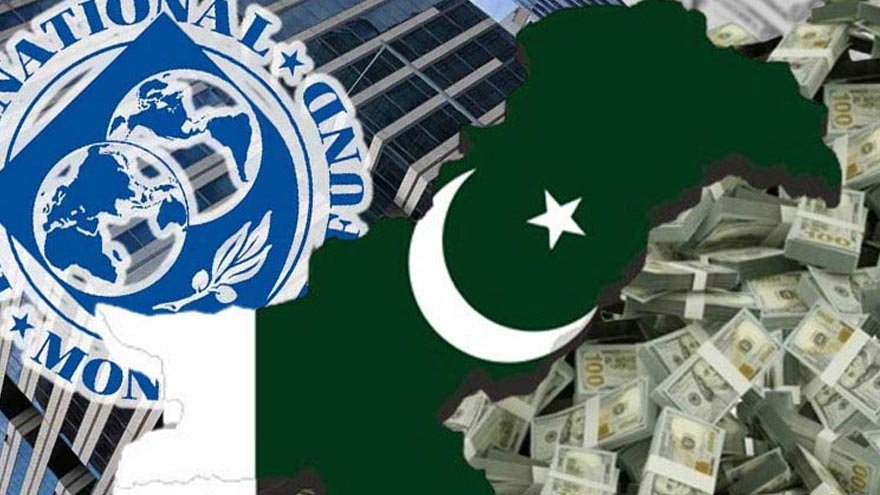
The International Monetary Fund (IMF) has imposed 11 additional conditions on Pakistan under the latest staff-level review of its $7 billion bailout programme, bringing the total number of required reforms to 64. The new measures, detailed in the IMF staff report released Thursday, focus on governance, transparency, tax reforms, remittances, and structural overhauls in key economic sectors.
PSX Edges Up Amid Cautious Trading as IMF Adds 11 New Conditions for Pakistan
A major component of the new conditions is a push for transparency in public governance. Pakistan must publish asset declarations of senior federal civil servants on a government website by December 2026 to detect potential income–asset discrepancies. This requirement will later extend to senior provincial bureaucrats, with banks granted full access to the declarations.
By October 2026, Pakistan is also required to publish a comprehensive anti-corruption action plan addressing vulnerabilities in 10 high-risk government departments. The plan will be based on institutional risk assessments and led by the National Accountability Bureau (NAB), while provincial anti-corruption bodies will be strengthened to process financial intelligence and conduct specialised investigations.
These conditions follow the Fund’s recent Governance and Corruption Diagnostic Assessment, which highlighted significant structural weaknesses across Pakistan’s legal and administrative apparatus.
Another major requirement concerns the rapidly rising cost of foreign remittances, projected to reach $1.5 billion in the coming years. Pakistan must complete a detailed assessment of remittance charges and cross-border payment barriers, and then propose a reform action plan by May 2026.
The IMF has further instructed Pakistan to conduct a study on persistent bottlenecks in the local currency bond market by September 2026, followed by a strategic reform roadmap.
In an unprecedented step targeting sectoral elite capture, Pakistan must adopt a National Sugar Market Liberalisation Policy by June 2026. The policy—requiring agreement between federal and provincial governments—will address licensing, price controls, zoning rules, and import/export permissions, as well as implementation timelines.
The Federal Board of Revenue (FBR), long criticised for missing revenue targets, faces new performance-related conditions. By December 2025, the government must finalise a comprehensive reform roadmap covering staffing needs, timelines, KPIs, and revenue projections. At least three priority reforms must be fully implemented, supported by legislation, personnel deployment and KPI reporting. In addition, a medium-term tax reform strategy must be published by December 2026.
In the power sector, Pakistan is required to complete all prerequisites for enabling private-sector participation in HESCO and SEPCO, and to sign public service obligation (PSO) agreements with all seven major distribution companies (DISCOs) before the next federal budget.
The government must also propose amendments to the Companies Act 2017 to strengthen compliance for unlisted firms and modernise governance practices. A concept note outlining reforms to the Special Economic Zones (SEZ) Act—including KPIs and the rationale for amendments—must also be published.
If revenue collection falls short by December 2025, Pakistan has agreed to introduce a mini-budget, which may include:
A 5% increase in federal excise duty on fertilisers and pesticides
A new excise duty on high-value sugary products
Broadening the sales tax base by shifting selected goods to the standard rate
The IMF also extended Pakistan’s timeline for publishing an action plan addressing weaknesses highlighted in the governance diagnostic report.