Maduro Pleads Not Guilty in New York as U.S. Raid Sparks Global Backlash
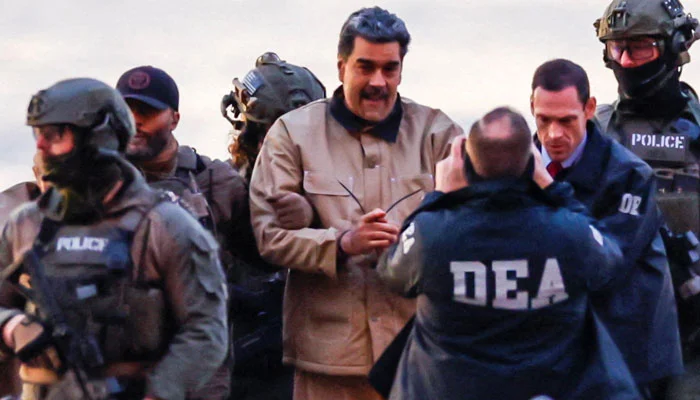
Toppled Venezuelan President Nicolás Maduro pleaded not guilty on Monday in a New York federal court to multiple criminal charges, including narco-terrorism, following his dramatic capture during a U.S. military operation ordered by President Donald Trump.
China Reaffirms Support for Venezuela as UN to Hold Emergency Meeting on U.S. Actions
Maduro, 63, faces four counts, including narco-terrorism, conspiracy to import cocaine into the United States, and possession of machine guns and destructive devices. U.S. prosecutors allege he oversaw a vast cocaine-trafficking network that collaborated with Mexico’s Sinaloa and Zetas cartels, Colombia’s FARC rebels, and Venezuela’s Tren de Aragua criminal gang.
Maduro has repeatedly denied the accusations, describing them as a pretext for U.S. “imperialist” ambitions aimed at seizing Venezuela’s vast oil reserves.
As world leaders reacted to the unprecedented seizure of a sitting head of state, Venezuelan authorities issued an emergency order instructing police to search for and arrest anyone who supported the U.S. operation carried out on Saturday.
The UN Security Council met on Monday to debate the legality and implications of the raid. Russia, China and several left-leaning governments condemned the action, while UN Secretary-General António Guterres warned of growing instability and raised concerns over the legality of the U.S. intervention — the most dramatic in Latin America since the 1989 invasion of Panama.
U.S. Special Forces reportedly entered Caracas by helicopter, breached Maduro’s security perimeter and detained him near a safe room before transferring him to the United States.
Maduro and Wife Appear in Court
On Monday morning, Maduro and his wife, Cilia Flores, were escorted under heavy guard from a Brooklyn detention facility to court in Manhattan. Prosecutors allege Maduro’s involvement in drug trafficking dates back to his time in Venezuela’s National Assembly in 2000, continuing through his tenure as foreign minister and presidency after succeeding Hugo Chávez in 2013.
Maduro was first indicted by U.S. authorities in 2020, with an updated indictment released over the weekend adding further details and naming Flores as a co-defendant. Washington has long considered Maduro an illegitimate leader following the disputed 2018 election.
Legal experts have questioned the legality of Trump’s action, arguing it undermines the international rules-based order.
Oil at the Centre of the Crisis
In Caracas, senior officials from Maduro’s long-ruling government remain in control, initially condemning the operation as an oil-driven “kidnapping” before signaling possible cooperation with Washington.
U.S. oil company shares surged on Monday amid expectations of renewed access to Venezuela’s vast reserves. Trump has openly stated that American companies would return to rebuild Venezuela’s oil sector, declaring, “We’re taking back what they stole. We’re in charge.”
Venezuela holds the world’s largest proven oil reserves, estimated at 303 billion barrels, though production has fallen sharply due to sanctions, mismanagement and underinvestment.
Acting President Calls for Dialogue
Venezuela’s acting president, Delcy Rodríguez, softened her rhetoric on Sunday, calling for respectful relations and cooperation with the United States. She urged dialogue over conflict, even as Trump threatened further action if Venezuela fails to open its oil sector and curb drug trafficking.
The future of Venezuela’s leadership remains uncertain. While Maduro’s allies still hold power, the opposition has yet to assert itself, and there are no clear signs of a military breakaway. Inside the country, celebrations among Maduro’s opponents remain muted amid ongoing uncertainty.