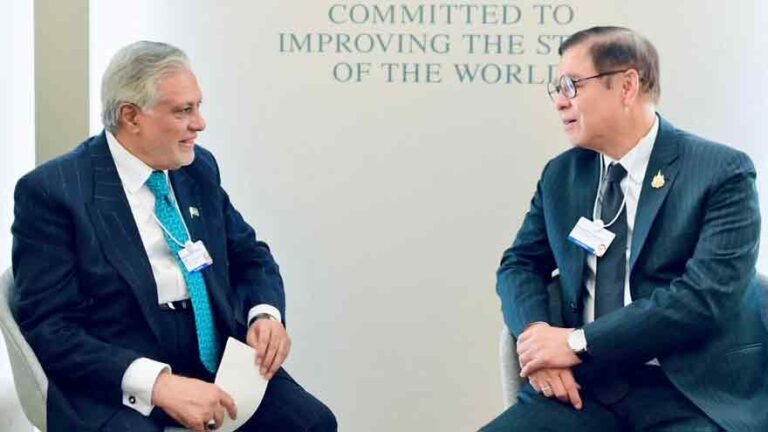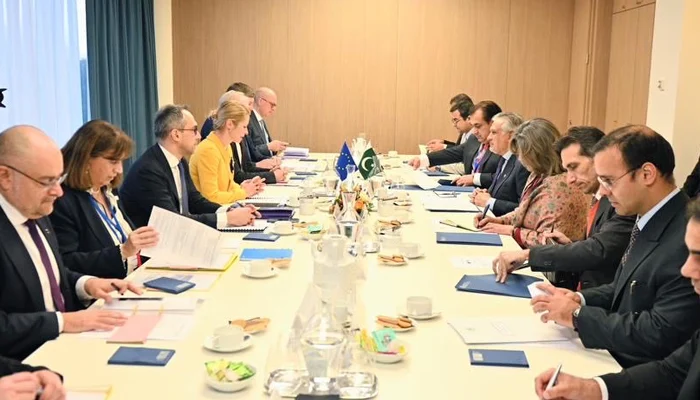
Pakistan and the European Union (EU) have urged Afghanistan’s de facto authorities to play a constructive role in achieving the shared goal of eliminating terrorism from Afghan territory. The call was made during the seventh Pakistan-EU Strategic Dialogue, co-chaired by Deputy Prime Minister Ishaq Dar and EU High Representative and Vice President Kaja Kallas in Brussels on November 21.
PPP Karachi Leaders Review Arrangements for 58th Foundation Day Rally
According to a joint statement issued by Pakistan’s Foreign Office, both sides discussed Pakistan-Afghanistan relations in the context of cross-border tensions reported in October 2025. They reaffirmed their commitment to regional peace, stability, and prosperity, emphasising the importance of resolving issues through dialogue among neighbouring states.
The statement noted that both Pakistan and the EU were concerned about Afghanistan’s worsening socio-economic situation and reiterated support for a peaceful, stable, and self-reliant Afghanistan contributing to regional stability. The EU also acknowledged Pakistan’s long-standing role in hosting millions of Afghan refugees for over four decades and emphasized that any future return should be safe, dignified, and aligned with international norms.
Both sides called on Afghan authorities to ensure the protection of human rights, particularly for women, girls, and vulnerable communities.
Beyond Afghanistan, the dialogue reviewed progress under the 2019 EU-Pakistan Strategic Engagement Plan. Islamabad and Brussels agreed to strengthen cooperation in political, economic, development, trade, migration, climate, and security sectors. They also welcomed ongoing collaboration through Erasmus Mundus and Horizon Europe programmes and pledged deeper cooperation on food security, energy resilience, and climate challenges.
The two sides reaffirmed their commitment to sustainable economic growth and trade, highlighting the crucial role of the GSP+ arrangement in boosting Pakistan-EU economic ties. The EU briefed Pakistan on progress toward a new GSP framework, while both partners restated their dedication to upholding human rights and fundamental freedoms.
Discussions also covered key global and regional issues. The EU provided an update on Russia’s war in Ukraine, while Pakistan raised the Jammu and Kashmir dispute. Both sides examined developments in the Middle East and welcomed the agreement on the first phase of the Comprehensive Plan aimed at ending the Gaza conflict.
They urged all parties to maintain the ceasefire, refrain from actions that could undermine the agreement, and prioritise humanitarian access, stabilisation efforts, transitional governance, and reconstruction in Gaza. They also reiterated support for concrete steps toward a two-state solution in accordance with UN resolutions.
Concluding the meeting, Pakistan and the EU reaffirmed their commitment to multilateralism, the UN Charter, and a rules-based international order rooted in shared interests. Both sides agreed to hold the eighth round of the Strategic Dialogue in Islamabad.