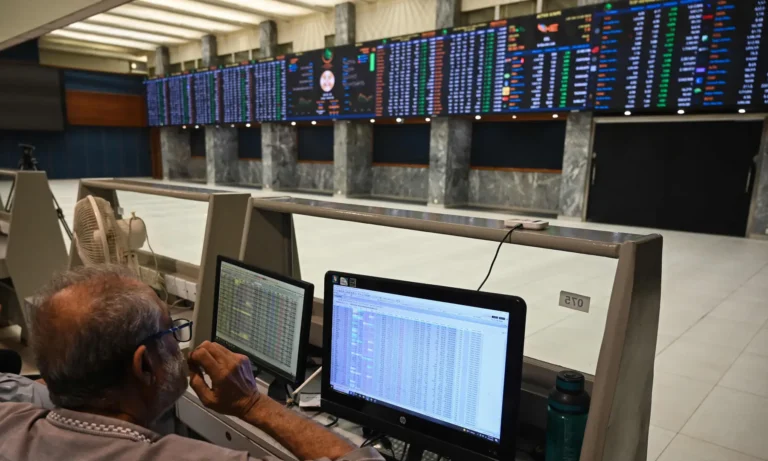
Pakistan’s trade sector has suffered a major setback in the first five months of the current fiscal year, with fresh official data revealing a steep decline in exports and a sharp rise in imports. The Pakistan Bureau of Statistics (PBS) says the downturn is largely driven by escalating regional tensions and mounting trade barriers.
According to PBS, the country’s trade deficit widened by more than 37%, expanding by $4.19 billion compared to the same period last year. Between July and November, the deficit surged beyond $15.46 billion, primarily due to shrinking export volumes and a rise in import demand.
By contrast, the trade deficit stood at $11.27 billion during the same period last fiscal year, underscoring the gravity of the current slump.
Exports Drop by $877 Million
Exports declined significantly during the July–November period, falling by $877 million. Total exports amounted to $12.84 billion — a 6.39% decrease from the $13.72 billion recorded in the corresponding five months of the previous year. Officials noted that ongoing regional unrest and new trade restrictions have disrupted major export channels, with food products taking the hardest hit.
Imports Surge Over 13%
While exports weakened, imports rose sharply by 13.26%, reaching $28.31 billion during the same period. The growing imbalance between declining exports and rising imports is the key factor behind the expanding trade deficit, analysts say.
November Sees Dramatic Month-to-Month Export Fall
November 2025 proved especially difficult for Pakistani exporters. PBS data shows that exports plunged 15.80% compared to October — a loss of $450 million within a single month. Export receipts fell from $2.84 billion in October to $2.39 billion in November.
Imports in November also declined by 13.70% to $5.25 billion, yet the monthly trade deficit still stood at $2.85 billion — an 11.86% decrease from October. Year-on-year comparisons show exports down 15.35% from November 2024.
Trade Deficit Climbs 33% Year-on-Year
Despite November’s fall in imports, the trade deficit surged 33% compared to the same month last year. Economists say the widening gap points to structural weaknesses in Pakistan’s export base, compounded by regional instability and external economic pressures.
The PBS report concludes that regional tensions and trade restrictions remain the main contributors to the deteriorating trade performance. Authorities warn that unless geopolitical conditions ease, the outlook for Pakistan’s trade sector may worsen further.
Export Development Surcharge Abolished After 34 Years
In a parallel development, the Federal Board of Revenue (FBR) officially abolished the Export Development Surcharge (EDS) after 34 years. A notification has been forwarded to the State Bank of Pakistan, instructing banks to stop deducting the surcharge from export proceeds.
The EDS, set at 0.25% of export value, had generated Rs5–6 billion annually since 2011. Exporters welcomed the move, with industry leader Zubair Motiwala noting that the Export Development Fund currently holds Rs50 billion.