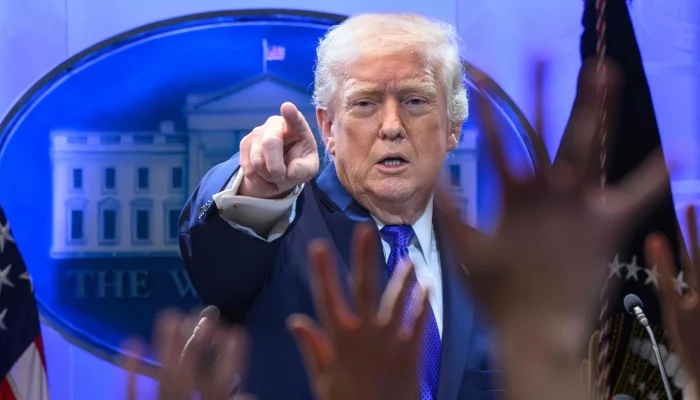
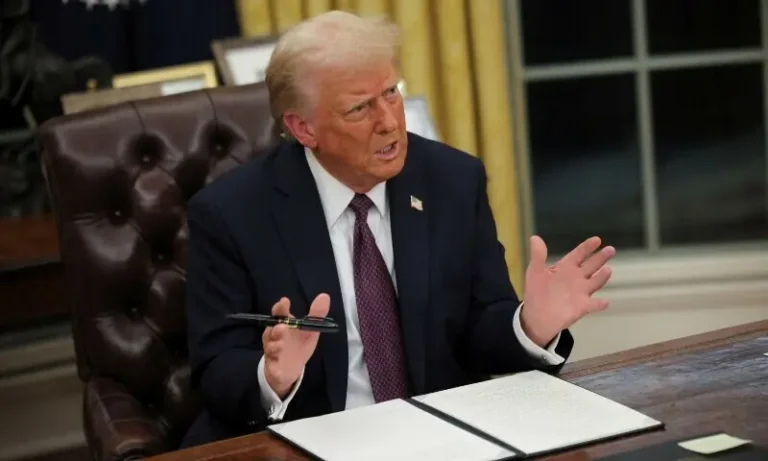
WASHINGTON: US President Donald Trump on Saturday sharply criticised a ruling by the US Supreme Court, calling it an “anti-American decision” and announcing an immediate increase in tariffs on imports from all countries from 10% to 15%.
The move came a day after the court struck down the administration’s earlier tariff programme, ruling that the president had exceeded his authority by imposing sweeping duties under an economic emergency law.
Following the verdict, Trump initially introduced a 10% universal tariff but quickly raised it to the maximum level permitted under Section 122 — a rarely used legal provision that allows temporary tariffs of up to 15% for 150 days unless extended by Congress.
In a post on Truth Social, Trump said the increase was effective immediately, arguing that many countries had been “ripping” the United States off for decades. He added that the administration would use the 150-day period to develop additional tariffs through other legally permissible mechanisms.
The White House said the Section 122 tariffs would include exemptions for certain products, including critical minerals, metals, and energy-related imports.
Trade analysts expressed concern over growing uncertainty for global partners, noting that no previous US president had invoked Section 122, raising the likelihood of further legal challenges. Some congressional aides also questioned whether lawmakers would approve an extension, particularly amid rising public concern over inflation and higher consumer prices.
Former US trade official Wendy Cutler said the rapid policy shift highlighted the unpredictable environment facing trading partners. Meanwhile, US Trade Representative Jamieson Greer stated that countries which had negotiated trade agreements with Washington must continue to honor those arrangements, even if they include higher tariff rates than the new universal level.
Under the revised framework, exports from countries such as Malaysia and Cambodia will remain subject to previously negotiated tariffs of 19%, while nations without agreements — including Brazil — could temporarily see tariff reductions to 15%.
The policy announcement comes as Trump’s economic approval ratings continue to decline, with recent polling showing growing public dissatisfaction over rising prices and trade tensions.