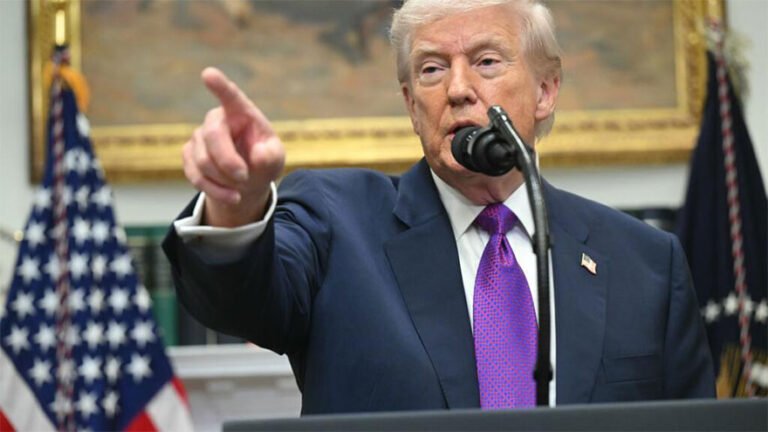
WASHINGTON: US President Donald Trump on Friday openly backed the possibility of regime change in Iran while announcing an expanded American military presence in the Middle East, including the deployment of a second aircraft carrier amid rising regional tensions.
Speaking after a military event at Fort Bragg, Trump said regime change in Iran “seems like that would be the best thing that could happen,” while declining to specify who could replace the current leadership. His remarks came as Washington simultaneously pursued renewed diplomatic talks with Tehran over its nuclear programme.
According to a source familiar with the matter, US envoys Steve Witkoff and Jared Kushner are scheduled to hold negotiations with Iranian representatives in Geneva on Tuesday, with Oman acting as mediator. The envoys are also expected to meet Russian and Ukrainian officials as part of US efforts to advance peace talks related to the Ukraine war.
The United States is seeking broader negotiations that would include Iran’s ballistic missile programme, regional activities and human rights concerns. Tehran, however, has maintained that discussions should remain limited to its nuclear programme in exchange for sanctions relief.
Trump warned that military action remained an option if diplomacy failed, reiterating earlier threats of strikes against Iranian targets. Iran has responded by warning of retaliation, raising fears of a wider regional conflict.
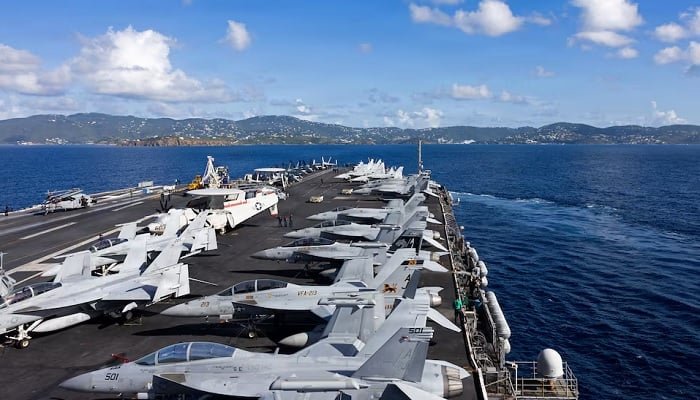
The Pentagon confirmed that the aircraft carrier USS Gerald R. Ford is being deployed to join the USS Abraham Lincoln and other US naval assets already operating in the region. Officials said the carrier strike group could take about a week to arrive.
The Gerald R. Ford, the newest and largest carrier in the US fleet, can carry more than 75 aircraft and is equipped with advanced radar and air-control systems. Its deployment underscores Washington’s strategy of maintaining military pressure while leaving space for diplomacy.
US officials noted that aircraft carriers are limited strategic assets and extended deployments can strain personnel, but said the move was necessary given escalating tensions and uncertainty surrounding negotiations with Iran.