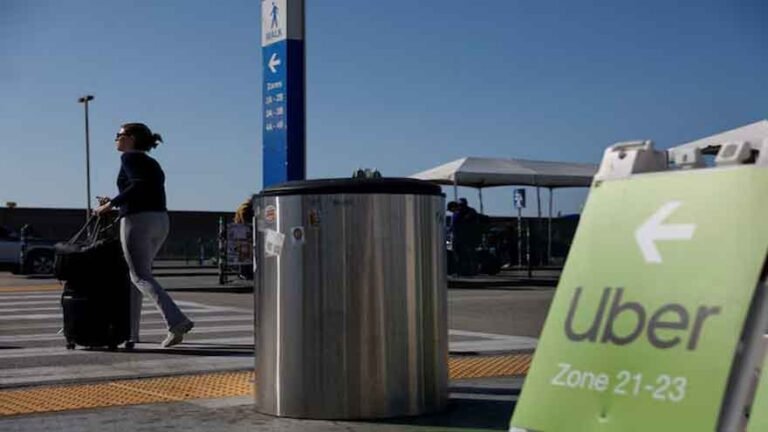
Uber Technologies has signed a multi-year partnership with autonomous vehicle developer Zoox to deploy robotaxis on its ride-hailing platform, marking Zoox’s first collaboration with a third-party mobility service.
Bayern Munich Thrash Atalanta 6-1 to Move Close to Champions League Quarter-Finals
The companies announced on Wednesday that the autonomous vehicles will initially launch in Las Vegas this summer, with a planned rollout in Los Angeles by mid-2027.
The robotaxis will be accessible through both the Zoox mobile application and the Uber platform for eligible trips, allowing passengers to book fully autonomous rides.
Zoox, which was founded in 2014 and acquired by Amazon for $1.3 billion in 2020, has been gradually expanding its autonomous mobility operations. The company launched limited services in Las Vegas and introduced a pilot rider programme in San Francisco last year.
Earlier this week, Zoox also announced plans to expand testing to Dallas and Phoenix, alongside the launch of a new fleet operations command hub in Arizona.
The agreement reflects a growing trend of partnerships between ride-hailing platforms and autonomous vehicle developers as companies race to commercialise robotaxi services.
Uber has already partnered with 25 autonomous vehicle technology developers and currently offers autonomous rides in cities such as Phoenix, Austin, Atlanta and Dubai. The company plans to expand the service to 15 cities worldwide by the end of 2026 and aims to become the largest facilitator of autonomous rides globally by 2029.
Zoox’s robotaxis stand out in the industry due to their distinctive design. Unlike conventional vehicles adapted for autonomous driving, the company’s cars are purpose-built without steering wheels or pedals and are designed entirely around passenger comfort.
The company has so far logged more than one million autonomous miles and served over 300,000 riders, highlighting growing interest in driverless mobility solutions.
Zoox still trails industry leader Waymo, the autonomous vehicle unit of Alphabet Inc., which currently leads the global robotaxi deployment race.