The United Nations Human Rights Council on Friday directed investigators to launch an urgent probe into alleged atrocities in Sudan’s El-Fasher and to identify suspected perpetrators so they can be brought to justice.
Saudi Crown Prince to Seek Security Guarantees as Trump Pushes for Israel Normalisation
During a special session convened to address the worsening crisis, the council adopted a resolution instructing the UN’s independent fact-finding mission on Sudan to investigate reported violations in the besieged city. The mandate also includes identifying—where possible—individuals responsible for the abuses to ensure accountability.
Warnings of possible crimes against humanity and a growing risk of genocide dominated the discussion.
“Bloodstains on the ground in El-Fasher have been photographed from space,” UN human rights chief Volker Türk said in his opening remarks. “The stain on the record of the international community is less visible but no less damaging.”
Sudan has been engulfed in a devastating conflict since April 2023, when fighting erupted between the Sudanese Armed Forces and the paramilitary Rapid Support Forces (RSF). The war has killed tens of thousands, displaced nearly 12 million people, and triggered one of the world’s worst humanitarian catastrophes.
The situation has escalated sharply in recent weeks, with the RSF seizing El-Fasher in Sudan’s western Darfur region after an 18-month siege. Reports of mass killings and other abuses have intensified.
‘Coordinated Campaign Against Civilians’
British ambassador Kumar Iyer, whose country requested the special session alongside Germany, Ireland, the Netherlands, and Norway, said “the scale and severity of the crisis in Sudan can no longer be met with silence.”
“The violence in El-Fasher bears the hallmarks of a coordinated campaign against civilians by the Rapid Support Forces,” he said, citing credible reports of targeted killings, systematic sexual violence, and deliberate starvation.
He urged member states to approve the resolution, warning that failure to act would allow impunity to persist. The resolution was adopted by consensus, though several states—including Sudan—distanced themselves from portions expanding the mission’s scope.
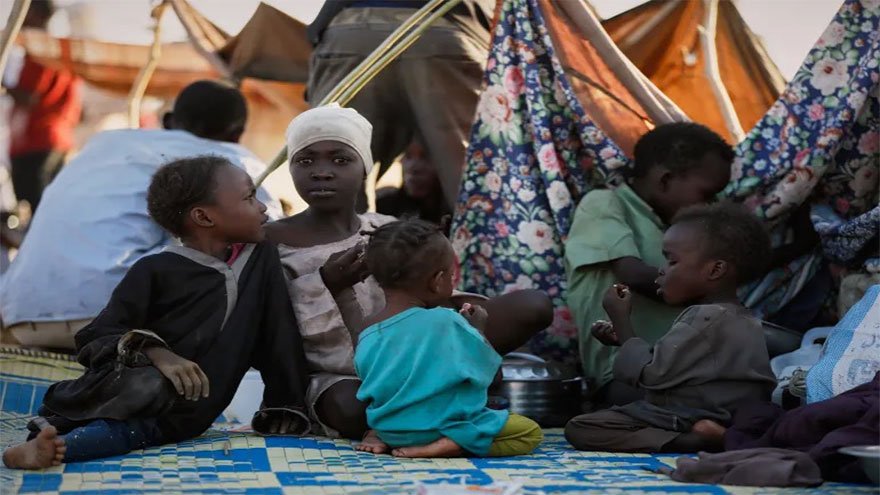
Reports from El-Fasher and surrounding areas describe executions, widespread sexual violence, abductions, looting, and attacks on humanitarian workers. Nearly 100,000 people have fled the city in the last two weeks, according to UN estimates.
Mona Rishmawi of the UN fact-finding mission told the session that “hundreds of women and girls were raped and gang-raped along escape routes, including in public,” with perpetrators acting without fear of consequences.
‘Risk of Genocide Is Real’
Adama Dieng, African Union special envoy and UN adviser on genocide prevention, issued a stark warning: “The risk of genocide exists in Sudan. It is real and it is growing every single day.”
Sudan’s ambassador Hassan Hamid Hassan also described the situation as “an existential war,” accusing the United Arab Emirates of supplying the RSF with military support. The UAE has repeatedly denied backing the paramilitary group.
UAE ambassador Jamal Jama Al Musharakh criticised both warring parties, accusing the Sudanese army of carrying out indiscriminate attacks on markets, villages, and hospitals amid worsening famine.
Several delegates stressed the urgent need to halt atrocities and ensure accountability. Concerns also extended to the neighbouring Kordofan region, where violence is intensifying.
“Kordofan must not suffer the same fate as Darfur,” one official warned.