West Bank Education Crisis Deepens as Budget Shortfall Cuts Schooling for Thousands of Students
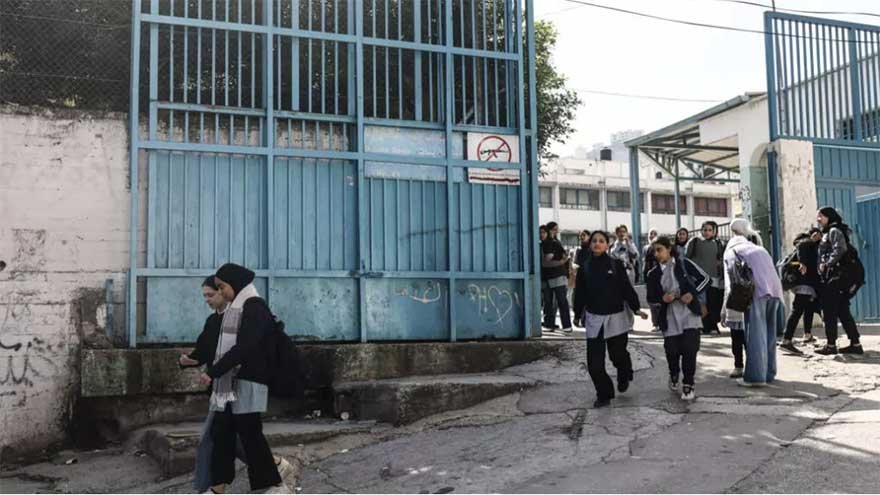
In the northern West Bank city of Nablus, 10-year-old twins Ahmad and Mohammed should have been attending school. Instead, they remain at home, among hundreds of thousands of students affected by a worsening education crisis triggered by a severe fiscal shortfall.
PM Shehbaz Sharif Calls for Global Commitment to Sustainable Development for Lasting Peace
Across the Israeli-occupied Palestinian territory, public schools have reduced teaching from five days a week to just three as the Palestinian Authority struggles to manage a deepening budget deficit. The financial crisis has forced authorities to cut teachers’ salaries to about 60 percent, leaving schools operating at less than two-thirds of normal capacity and disrupting education for nearly 630,000 pupils.
Parents and educators warn that the long-term consequences could be devastating. Ibrahim al-Hajj, father of the twins, said reduced classroom time threatens children’s futures, stressing that without proper schooling, opportunities for higher education may disappear.
The financial strain has been compounded by Israel withholding customs tax revenues it collects on behalf of the Palestinian administration following the outbreak of the Gaza war in October 2023. Economic conditions in the West Bank have also deteriorated as work permits for Palestinians in Israel were suspended and movement restrictions intensified.
School officials say the disruption is eroding learning foundations, particularly among younger students. Headmistress Aisha Khatib noted that today’s pupils face far fewer educational opportunities compared to previous generations, while many teachers have left the profession due to salary reductions.
Families increasingly rely on private tutoring to compensate for lost classroom hours, but rising costs make it unsustainable for many households. Teachers report declining academic performance, shorter attention spans and growing psychological stress among students.
The crisis extends to schools run by the United Nations Relief and Works Agency for Palestine Refugees in the Near East (UNRWA), which educates tens of thousands of children in refugee camps. Agency officials describe the situation as a “systemic emergency,” citing falling proficiency in Arabic and mathematics alongside repeated disruptions caused by military activity and the lingering effects of the Covid-19 pandemic.
Funding shortages have also affected UNRWA operations after several donor countries, including the United States, suspended contributions, forcing the agency to consider reducing school days as well.
According to UNRWA, ongoing military operations and displacement in parts of the northern West Bank have caused some students to lose nearly half of their learning days, while several schools face closure or demolition orders, including institutions in annexed East Jerusalem.
Teachers say the cumulative impact is deeply concerning. “We are supposed to look toward a bright future,” one educator said, “but instead, conditions are steadily getting worse.”