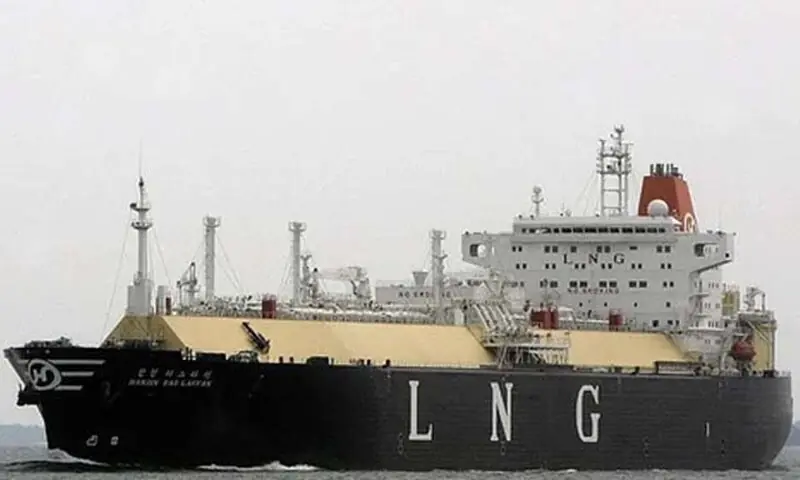
ISLAMABAD, April 25: State-owned Pakistan LNG Limited (PLL) has approved a revised bid of $18.4 per million British thermal units (mmBtu) from TotalEnergies for the delivery of a liquefied natural gas (LNG) cargo between April 27 and 30, while rejecting all other offers, officials confirmed.
Eight Injured in Twin Attacks on Police Vehicle and Ambulance in Bajaur
The decision followed negotiations during which TotalEnergies lowered its initial bid from $18.88 per mmBtu to $18.4. Authorities opted to reject competing bids for early May deliveries despite some being marginally lower, citing expectations surrounding the potential reopening of the critical maritime route, the Strait of Hormuz.
PLL had received four bids ranging between $17.997 and $18.88 per mmBtu for cargo deliveries between April 27 and May 8. Among them, Vitol Bahrain offered $18.54 per mmBtu for the May 1–7 window, while OQ Trading quoted the lowest price of $17.997 per mmBtu for May 8–14 deliveries. However, both bids were ultimately rejected.
The tenders were issued on an emergency basis as Pakistan faces a growing electricity shortfall exceeding 4,500 megawatts during peak hours, resulting in prolonged loadshedding of six to seven hours in various parts of the country.
The urgency has been exacerbated by disruptions in LNG supply, particularly after QatarEnergy showed reluctance to dispatch shipments stranded in the Gulf due to security concerns linked to the temporary closure of the Strait of Hormuz. Three LNG cargoes intended for Pakistan were reportedly turned back under force majeure conditions.
With additional charges and taxes, the cost of regasified LNG (RLNG) is expected to rise to around $23 per mmBtu—nearly double the levels seen in March. Previously, the Oil and Gas Regulatory Authority had notified a 19–22% increase in RLNG prices to between $12.50 and $14 per mmBtu for March, based on an import price of approximately $7.6 per mmBtu.
The surge in RLNG prices has been attributed to higher terminal charges amid reduced import volumes, as well as a slight uptick in global LNG prices. Notably, only two LNG cargoes were imported in March, compared to eight cargoes in preceding months, largely due to supply disruptions.
Pakistan’s LNG imports are primarily managed through long-term contracts handled by Pakistan State Oil, particularly with Qatar. Recent imports under these agreements averaged around $7.68 per mmBtu, still significantly lower than current spot market rates.
Despite its mandate to manage LNG imports, PLL has remained largely inactive over the past year, drawing criticism for its limited operational role while continuing to incur administrative costs. Its last tender before the current one was issued in December 2023 for January 2024 delivery but was later cancelled.
Facing mounting public criticism over early-season loadshedding, the Power Division had recently directed the Petroleum Division to arrange approximately 400 million cubic feet per day (mmcfd) of LNG to meet anticipated summer demand.
Electricity demand in Pakistan is expected to exceed 28,000 MW during peak summer months. While solar energy has helped reduce daytime grid load, demand typically surges after sunset when consumers revert to conventional power sources.
Officials remain hopeful that improved global supply conditions, particularly the reopening of key shipping routes, will help stabilize LNG availability and prices in the coming weeks.