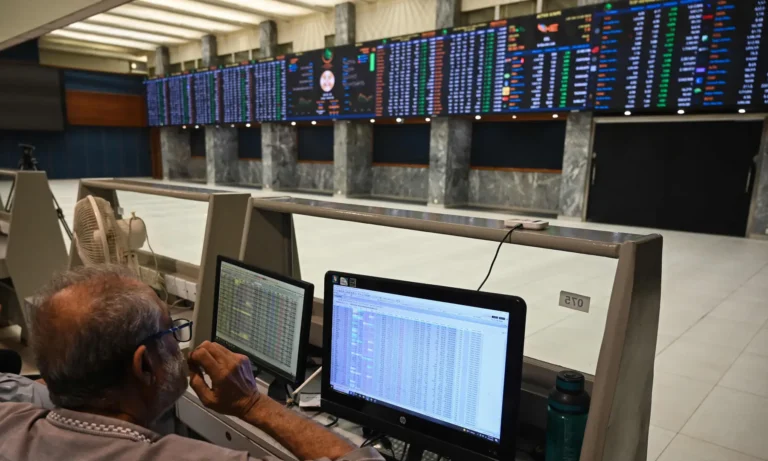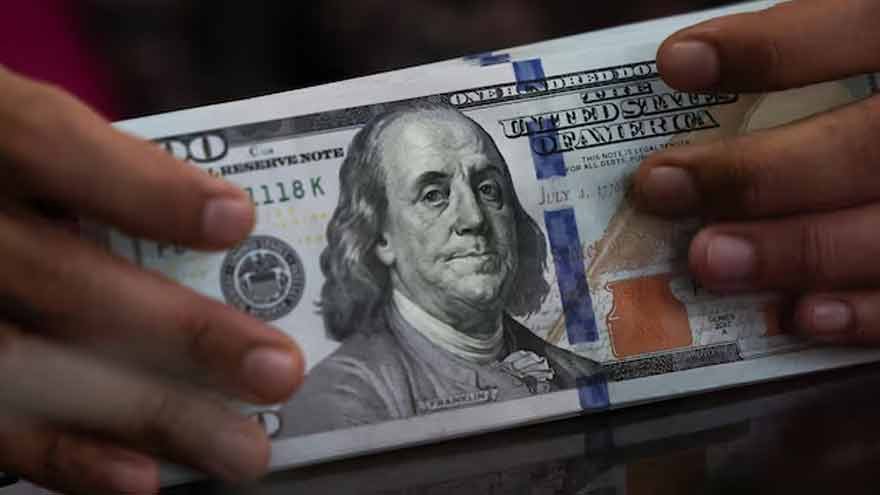
The US dollar held on to its overnight gains against major currencies on Thursday after President Donald Trump withdrew his threat to impose tariffs on several European NATO allies, easing market concerns and improving risk sentiment.
Dollar Holds Gains as Trump Drops Tariff Threats, Markets Stabilise
Trump’s comments, made at the World Economic Forum in Davos, helped calm investors after days of volatility triggered by his warnings of trade penalties linked to US ambitions over Greenland. The president said he had ruled out military action and announced a framework for a deal with NATO, prompting relief across global markets.
The easing of geopolitical tension pushed the Swiss franc lower, with the safe-haven currency retreating sharply from a three-week high. Gold prices also slipped after hitting a record peak earlier this week.
The euro was steady at $1.1685, following a rebound of 0.3 per cent in the previous session, while the dollar was flat at 0.7953 Swiss francs after a sharp overnight jump.
The Australian dollar outperformed, climbing to a 15-month high on the back of improved risk appetite and stronger-than-expected labour market data. It rose 0.4 per cent to $0.6791, its highest level since October 2024, and also reached a six-month high against the yen.
Data released on Thursday showed Australia’s unemployment rate fell to a seven-month low in December, supported by a surge in employment that far exceeded forecasts. Analysts said the figures could influence the Reserve Bank of Australia’s policy decision due on February 3.
“The strong jobs report has significantly raised the likelihood of an RBA rate hike,” said IG analyst Tony Sycamore, noting that the data reinforced the central bank’s view that labour market conditions remain tight.
Meanwhile, the Japanese yen remained under pressure, hovering near record lows against the euro after Prime Minister Shinzo Abe called a snap election and signalled plans to loosen fiscal policy. The yen traded near 184.83 per euro, close to last week’s record low, and stood at around 158.31 per dollar, not far from its weakest level in 18 months.
The Bank of Japan began a two-day policy meeting on Thursday, though markets widely expect no change in interest rates following a hike at its previous meeting.
Market analysts said Trump’s reversal on tariffs and military threats had reduced fears of a confrontation between the United States and its NATO allies.
“Markets have largely removed the tail risk of a US clash with NATO partners,” said Chris Weston, head of research at Pepperstone, adding that investors were trimming defensive positions and rebalancing exposure in currencies and precious metals.