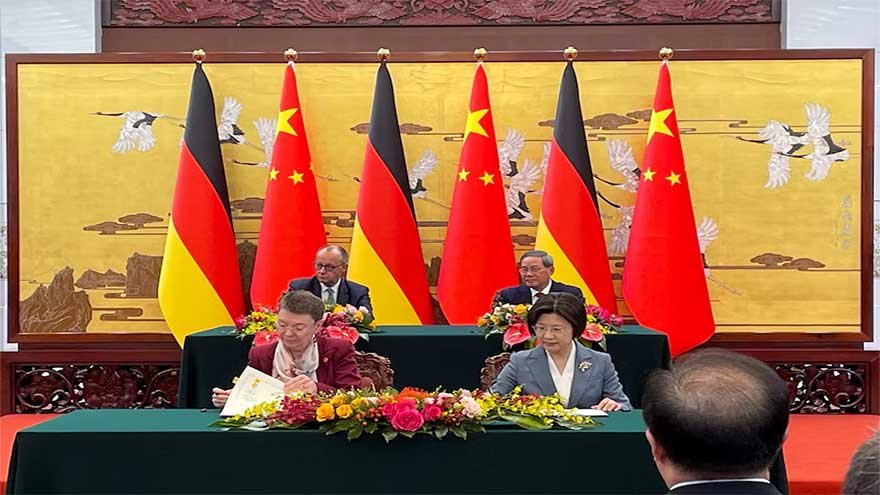
Germany and China pledged to deepen economic cooperation as German Chancellor Friedrich Merz met Chinese Premier Li Qiang during a visit aimed at resetting bilateral ties amid growing trade imbalances.
Maryam Nawaz Approves ‘One Punjab, One Standard’ Policy for Uniform Infrastructure Development
Merz said Berlin attaches great importance to maintaining strong economic exchanges with China — Germany’s largest trading partner last year — while stressing the need for fair cooperation and transparent communication.
“We have very specific concerns regarding our cooperation, which we want to improve and make fair,” he said, acknowledging the challenge of reshaping an economic relationship increasingly viewed as unfavourable to German industry.
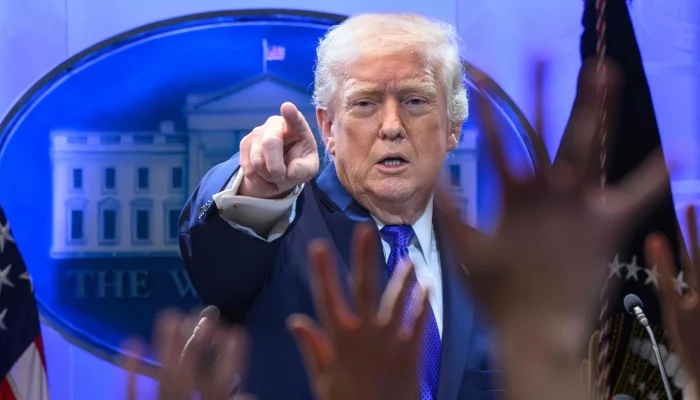
Li urged both countries to jointly safeguard multilateralism and free trade, remarks widely interpreted as a response to global trade tensions linked to policies pursued by Donald Trump.
Despite positive rhetoric, the agreements signed following the talks were limited in scope. The five documents focused mainly on cooperation in climate transition, animal disease prevention, poultry trade protocols, and sports collaboration in football and table tennis.
The visit included a large German business delegation of around 30 companies, including major automakers Volkswagen and BMW, which are facing increasing competitive pressure from Chinese manufacturers — a factor contributing to Berlin’s concerns over widening trade imbalances.
China is seeking to present itself as a stable economic partner for Europe as global trade tensions persist, while European officials warn of growing dependence on Chinese supply chains and declining market share for EU companies in China.
Analysts say engagement between Europe’s largest economy and Beijing could shape broader European Union–China relations in the coming year, particularly as European leaders attempt to balance economic cooperation with strategic caution.