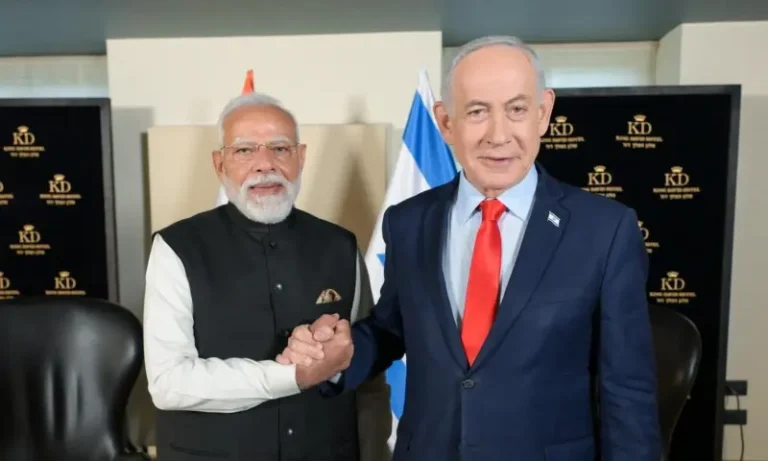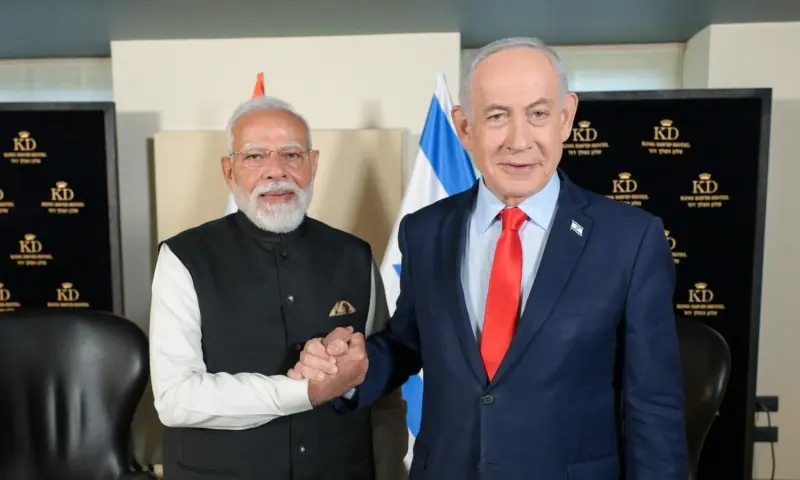
India will soon finalise a mutually beneficial free trade agreement with Israel, Prime Minister Narendra Modi announced on Thursday, signalling deeper economic and strategic cooperation between the two nations.
Amna Ilyas Focuses on Meaningful Roles and Fashion Venture to Build a Lasting Legacy
Speaking at the conclusion of his two-day visit, Modi said New Delhi and Tel Aviv are working to expand collaboration across trade, defence and technology sectors. He emphasised plans for joint development, production and technology transfer in defence, describing the partnership as increasingly forward-looking.
At a joint press conference in Jerusalem with Israeli Prime Minister Benjamin Netanyahu, Modi stressed shared positions on global security, stating that both countries agree there is “no place for terrorism in the world” and pledged continued cooperation against it.
He also highlighted the importance of peace, noting that humanity should not become a casualty of conflict. Following the talks, Netanyahu’s office confirmed that multiple agreements covering economic, security and diplomatic cooperation are expected to be signed between the two sides.
Separately, Modi held talks with Israeli President Isaac Herzog, describing the discussions as wide-ranging and productive. In messages shared on social media platform X, both leaders underscored the growing strength of India-Israel relations and the potential for collaboration in technology, innovation and startup ecosystems.
Negotiations for the India-Israel Free Trade Agreement formally began earlier this week in New Delhi. According to India’s government, bilateral merchandise trade between the two countries reached $3.62 billion during the 2024–2025 period.
During his visit, Modi also addressed Israel’s parliament, reaffirming India’s firm support for Israel while expressing backing for efforts aimed at achieving lasting peace and regional stability.
The visit, however, drew criticism from some quarters in India amid ongoing tensions in Gaza. Earlier, Netanyahu had described India, Greece and Cyprus among countries forming a broader alignment against what he termed “radical axes.”