ISLAMABAD: Pakistan’s planned rollout of 5G services next year is expected to reshape the country’s mobile technology landscape, but the telecom regulator has urged the government to ease heavy taxation on telecom equipment to ensure a smooth transition.
Prime Minister Shehbaz Sharif has set a February 2026 deadline for the Ministry of Information Technology and Telecom and the Pakistan Telecommunication Authority (PTA) to auction the 5G spectrum, a move aimed at expanding mobile-based services and digital connectivity.
According to PTA data, Pakistan has 196 million mobile subscribers, including 148 million mobile broadband users. Despite this, fewer than five per cent of mobile devices in the country are currently 5G-enabled.
The adoption of 5G-ready smartphones is expected to unlock advanced features such as e-SIMs, NFC-based nano-banking, wireless charging, and other functions powered by upgraded chipsets and processors. The regulator has therefore advised the IT ministry to ensure an adequate supply of compatible devices before launch.
Retired Brig Amer Shahzad, PTA director general, said manufacturers must prepare ahead of time. “If the cost of 5G-compatible sets is very high, users will not opt for them,” he warned.
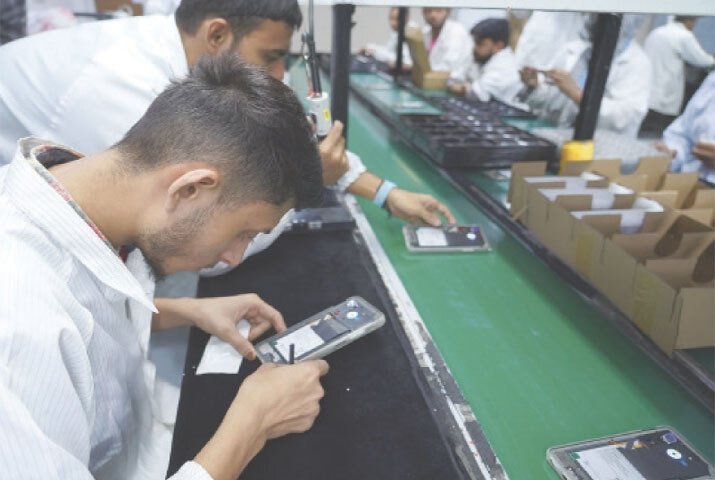
Industry representatives echo this concern. The Pakistan Mobile Phone Manufacturers Association (PMPMA) reports that around 40 per cent of users still rely on basic feature phones, and nearly 10pc of Pakistan’s population does not own a mobile phone at all. Local manufacturers currently produce about 1.2 million smartphones and 1.5 million feature phones per month — roughly 30 million units annually.
Zeeshan Miannoor of Inovi Telecom said the shift to 5G chipsets and processors will add between $30 and $200 to handset production costs, depending on the model. While camera and speaker features are expected to remain unchanged, the upgraded motherboard will enable e-SIM and wireless charging capabilities. However, he cautioned that rising prices could slow consumer adoption.
The PTA has also highlighted that high phone prices — driven largely by taxes — remain a major barrier to digital access. The authority has recommended reducing taxes on imported mobile manufacturing components, which currently face duties of around 19.5pc, as well as taxes on backend equipment used by telecom operators.
The regulator believes cutting these taxes would expand smartphone penetration and internet usage, ultimately increasing government revenues through the growth of digital services.