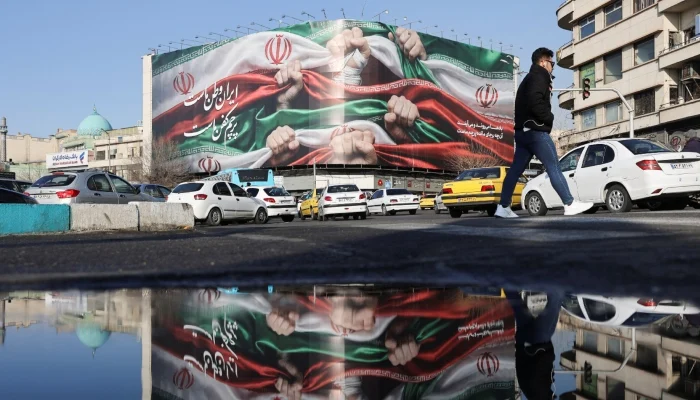
Tehran: Iran’s judiciary chief Gholamhossein Mohseni Ejei on Sunday warned that those responsible for the recent wave of anti-government protests would face punishment “without the slightest leniency,” as authorities moved to pursue legal action against alleged instigators.
The demonstrations, which began earlier this month over rising living costs, quickly escalated into a broader protest movement, marking one of the most serious challenges to the Iranian government in years. Officials now say the unrest has subsided and normalcy has returned across the country.
Quoting Ejei, the official Mizan online news portal reported that the public expects those accused of organizing riots and acts of violence to be swiftly tried and punished if found guilty. He stressed that investigations must be conducted with the “greatest rigour,” adding that justice requires strict punishment for those involved in killings, arson, and destruction.
Iranian authorities have placed the death toll from the protests at 3,117, including 2,427 individuals described as “martyrs,” a term used for members of the security forces and civilians. The government has blamed the unrest on “rioters” allegedly encouraged by the United States and Israel.
Meanwhile, US President Donald Trump has warned of possible military intervention should Iran proceed with executions of protest suspects, though he recently softened his stance after claiming Tehran had suspended planned executions. Speaking to reporters after returning from Davos on Thursday, Trump said the United States was sending a “massive fleet” toward Iran “just in case.”
In June, the United States carried out strikes on Iranian nuclear facilities after briefly joining Israel in a 12-day conflict with Tehran.
Separately, Colonel Mehdi Sharif Kazemi, commander of Iran’s special police, said authorities relied only on non-lethal methods to control the unrest. Quoted by Mehr news agency, he stated that police used measures such as water cannons and denied employing firearms, saying the approach was intended to protect civilians and avoid fatalities.