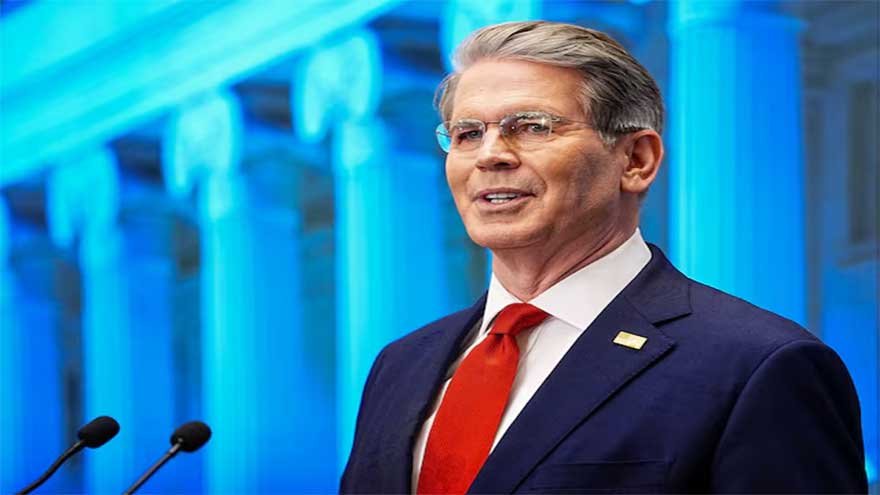
US Treasury Secretary Scott Bessent has said that additional US sanctions on Venezuela could be lifted as early as next week to facilitate oil sales, marking a significant shift in Washington’s approach following the capture of Venezuelan leader Nicolas Maduro.
Golden Globes Poised for Political Edge as One Battle After Another Emerges as Awards Front-Runner
In an interview with Reuters late Friday, Bessent said the Treasury Department was examining measures to ease restrictions on Venezuelan oil sales and allow proceeds—currently held largely offshore—to be repatriated for use inside the country.
“We’re de-sanctioning the oil that’s going to be sold,” Bessent said, adding that officials were assessing how revenues could be returned to Venezuela to support governance, security services and the population.
He confirmed that further sanctions relief “could be as soon as next week,” though he did not specify which measures would be removed.
Bessent also revealed plans to meet next week with the heads of the International Monetary Fund (IMF) and World Bank to discuss their possible re-engagement with Venezuela. He said nearly $5 billion in Venezuela’s frozen IMF Special Drawing Rights (SDRs) could be mobilised to help rebuild the country’s economy.
Venezuela holds about 3.59 billion SDRs—worth roughly $4.9bn—but currently cannot access them due to sanctions. Bessent said the US Treasury would be willing to support converting those assets into dollars for reconstruction purposes.
The moves are part of the Trump administration’s broader effort to stabilise Venezuela and encourage the return of US oil producers, a week after US forces captured Maduro in Caracas and transferred him to New York to face drug trafficking charges.
US sanctions have long prevented international banks and creditors from dealing with Venezuela without special licences, complicating a potential $150bn debt restructuring seen as critical for restoring private investment.
On Friday, President Donald Trump signed an executive order preventing courts or creditors from seizing Venezuelan oil revenues held in US Treasury accounts, declaring that the funds should be preserved to support “peace, prosperity and stability” in Venezuela.
The IMF has not formally engaged with Venezuela since 2004, while the World Bank last extended loans in 2007. An IMF spokesperson said the Fund was monitoring developments but declined to comment on planned meetings. A source familiar with World Bank discussions said the lender was in early stages of exploring how it could assist Venezuela following political changes.
Bessent said smaller, privately held oil companies were likely to return quickly to Venezuela’s energy sector, even as some major firms remain cautious due to past nationalisations. He added that Chevron, which has maintained a long-standing presence in the country, was expected to expand its commitment.
He also suggested that the US Export-Import Bank could play a role in guaranteeing financing for Venezuela’s oil industry.