French Naval Officer Attributes Rafale Losses in 2025 Indo-Pak Aerial Clash to Pilot Error, Not Aircraft Fault
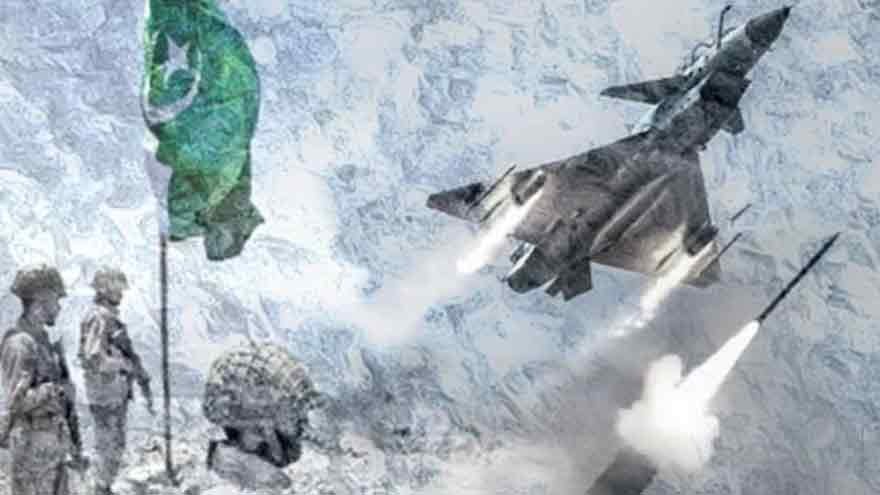
A senior French naval officer has stated that Pakistan successfully shot down Indian Rafale fighter jets during the May 2025 aerial clashes, describing the outcome as a result of operational shortcomings rather than technical flaws in the aircraft.
A senior French naval officer has stated that Pakistan successfully shot down Indian Rafale fighter jets during the May 2025 aerial clashes, describing the outcome as a result of operational shortcomings rather than technical flaws in the aircraft.
Captain Jacques Launay, commander of the Naval Air Base at Landivisiau, made the remarks while addressing delegates at an international Indo-Pacific conference. His comments follow earlier acknowledgments reported from U.S. officials, including former president Donald Trump and members of the U.S. Congress.
Captain Launay, who has more than 25 years of experience flying Rafale jets and has participated in missions across the Middle East, Africa, and Europe, stressed that the losses were attributable to the way the aircraft were employed. He emphasized that the Rafale platform itself was not at fault.
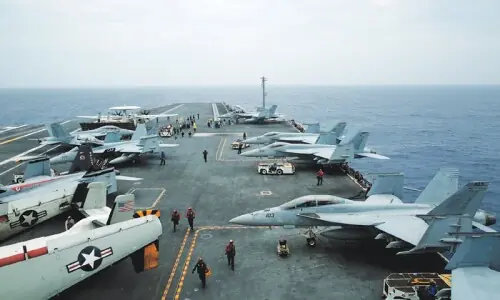
The Landivisiau naval base houses a squadron of Rafale fighters capable of carrying over 40 nuclear-capable missiles. Speaking on the incident, Captain Launay commended Pakistan’s air defense performance, noting that the Pakistan Air Force (PAF) “handled the situation in a highly effective manner.”
He added that the Rafales involved in the clash were not defeated due to the technological edge of Chinese-origin jets, but because of Pakistan’s robust defensive planning and execution. The engagement, according to him, involved more than 140 aircraft and presented a highly complex combat environment in which Pakistan outperformed India.
Addressing questions regarding reported radar issues on the Indian Rafales, Captain Launay clarified that the problem did not stem from the aircraft systems themselves. “Rafales can defeat Chinese jets in any combat scenario if operated correctly,” he said.
He also noted India’s interest in acquiring the naval variant of the Rafale, capable of operating from aircraft carriers and equipped to carry nuclear-capable missiles — a capability currently exclusive to the French Navy.
Defense analysts say the 2025 aerial confrontation has drawn significant global attention, offering insights into modern air warfare, including the role of pilot proficiency, aircraft systems, and air-to-air missile performance in real combat operations.