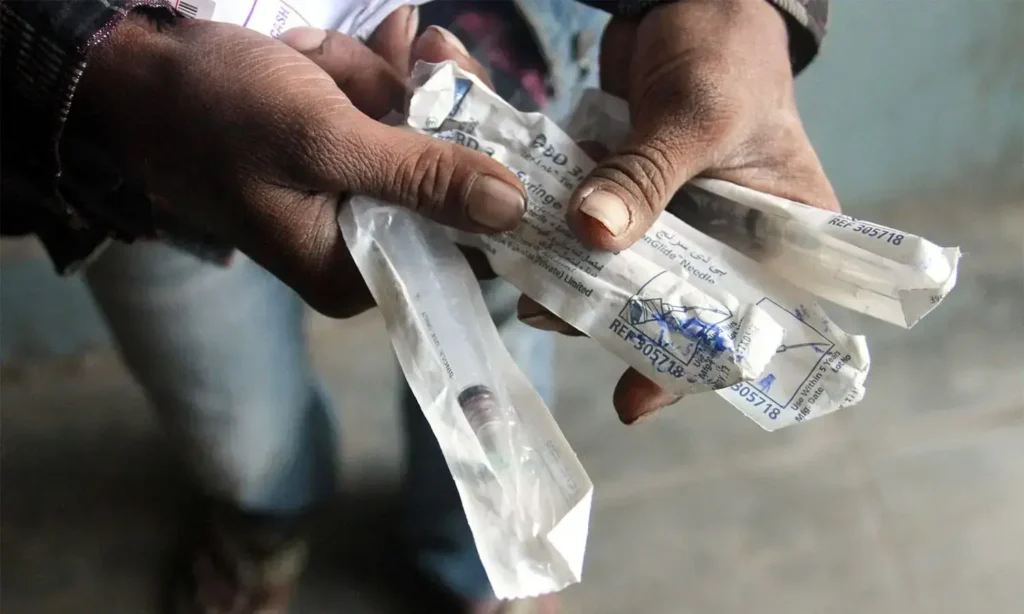
Islamabad — Pakistan’s health authorities have initiated urgent measures to address a rising number of HIV infections, particularly linked to the reuse of syringes, as a possible visit by a delegation from the Global Fund to Fight AIDS, Tuberculosis and Malaria is expected to review the situation in the country.
Netanyahu Says Early-Stage Prostate Cancer Treated Successfully, Health Report Confirms
The Ministry of National Health Services has directed the Drug Regulatory Authority of Pakistan and the Common Management Unit to develop a mechanism to prevent HIV transmission, with a focus on unsafe injection practices.
Health experts have raised alarm over more than 300 reported HIV cases among children in Taunsa, allegedly caused by the reuse of contaminated syringes. In Islamabad alone, at least 618 new HIV cases were reported between January 2025 and March 2026, according to health data cited by officials.
Former health adviser Zafar Mirza had earlier identified unsafe syringe reuse and inadequate blood screening as major contributors to the spread of the virus.
A parliamentary review has also been initiated, with the National Assembly Standing Committee on Health taking notice of the situation and seeking a detailed briefing on the rising HIV cases. The committee is chaired by Mahesh Kumar Malani.
Officials believe the Global Fund delegation, typically based in Geneva, may visit Pakistan in early May to assess ongoing disease control programmes. Pakistan has received over $1 billion in Global Fund support over the past two decades for HIV, tuberculosis, and malaria control.
However, internal concerns have also emerged regarding governance and programme management. One health official alleged that disease control efforts previously managed by technical experts were later merged under centralized structures, leading to reduced efficiency and bureaucratic delays.
The Global Fund itself had previously highlighted weaknesses in governance, limited domestic financing, and frequent leadership changes as major obstacles in Pakistan’s HIV response.
In response, Health Ministry spokesperson Sajid Shah said that reported case figures had been misrepresented in some media reports, but confirmed that urgent corrective measures are underway.
He stated that 2cc and 5cc syringes have already been replaced with auto-disable variants to reduce infection risks. However, concerns remain over the continued availability of 10cc syringes, which authorities say may still be reused in some cases. Investigations are underway to determine whether further restrictions are required.
Health Minister Syed Mustafa Kamal has reportedly directed officials to treat the matter as a high priority, with efforts underway to strengthen prevention, regulation, and disease control systems.